

Physalis pruinosa
- noun
- Specialized
- The farmers are growing Physalis pruinosa for its uniquely sweet yellow fruits.
Examples
-
Jam made from Physalis pruinosa is prized for its delicate flavor.
-
The Physalis pruinosa is also known as the ground cherry.
-
Botanists recently observed a wild patch of Physalis pruinosa thriving near the woodland edge.
-
The Physalis pruinosa plant thrives in warm climates.
-
The farmers are growing Physalis pruinosa for its uniquely sweet yellow fruits.
-
Jam made from Physalis pruinosa is prized for its delicate flavor.
-
Botanists recently observed a wild patch of Physalis pruinosa thriving near the woodland edge.
Synonyms

A small plant that produces sweet edible yellow fruits inside a thin paper husk
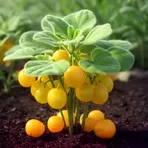
A small plant with hairy leaves that makes sweet yellow fruits

A one-year plant with round yellow berries inside a paper-like husk, often grown for decoration or fruit
Surface Forms
Morphology
Physalis + pruinosa
This is a scientific binomial composed of the genus name 'Physalis' plus a Latin species epithet; a learner who knows both constituents would at least recognise it as a particular kind of Physalis, so the compositional relationship is clear. However, species epithets are essentially labels in Latin and 'pruinosa' is not a common English word conveying the plant's specific traits to a B1 learner, so the precise meaning/details remain unpredictable without prior botanical or Latin knowledge.
Etymology
Physalis pruinosa comes from old Greek and Latin words that describe how the plant looks. Physalis means a small 'bladder' or lantern because the fruit sits in a paper husk, and pruinosa means 'frosty' or covered in a dusty coating, so the name describes its little paper-covered, frosty fruit.

