

Phyllocladus asplenifolius
- noun
- Specialized
- Botanists studied the unique leaflike branchlets of Phyllocladus asplenifolius to understand its adaptation to the climate.
Examples
-
The Phyllocladus asplenifolius is commonly known as the celery pine.
-
The Phyllocladus asplenifolius is an evergreen tree found only in Tasmania's highland forests.
-
Wood from Phyllocladus asplenifolius is valued for its durability and fine grain.
-
Did you see the Phyllocladus asplenifolius in the botanical garden?
-
The unique leaflike branchlets of Phyllocladus asplenifolius help it conserve water in Tasmania's dry climate.
-
In Tasmania, the Phyllocladus asplenifolius thrives in well-drained soil, showcasing its unique adaptation to local conditions.
-
The tall structure of Phyllocladus asplenifolius allows it to compete effectively for light among other trees in the forest.
Synonyms

A medium-sized evergreen tree from Tasmania with leaves like celery
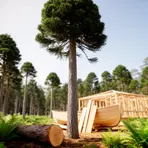
A tall evergreen tree from Tasmania with strong, fine wood that people use for boats and building
Surface Forms
Morphology
Phyllocladus + asplenifolius
This is a Latin binomial (scientific name) rather than an ordinary English phrase; although the genus gloss (‘trees with flattened leaf‑like stems’) gives a hint, the specific epithet 'asplenifolius' is not a regular English word and lacks a supplied meaning. Biological taxonomic names and Latinized epithets are specialist and not compositional for a B1 learner, so the overall meaning cannot be derived from the parts.
Etymology
Phyllocladus asplenifolius comes from old Greek and Latin words: phyllo meaning 'leaf', cladus meaning 'branch', and asplenifolius meaning 'fern-leaved'. The name paints a picture of the tree—its branches are flattened like leaves and look a bit like fern leaves, so the name helps you remember what the plant looks like.

