
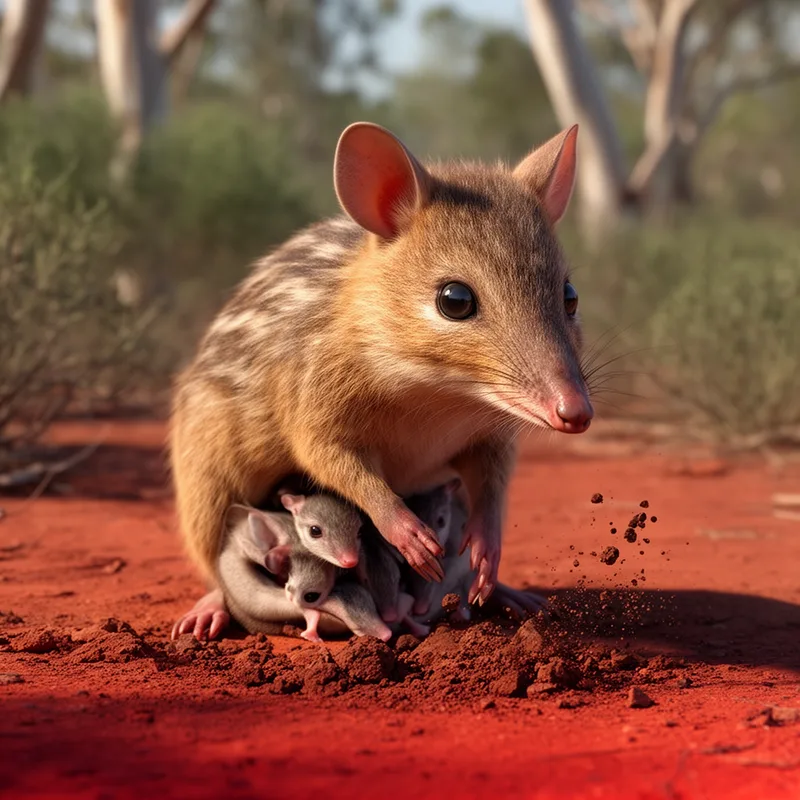
Peramelidae
- noun
- /ˌpɛrəˈmɛlɪdeɪ/
- Specialized
- The Peramelidae family contains several species of bandicoots native to Australia and New Guinea.
Examples
-
Scientists study Peramelidae fossils to learn about marsupial evolution.
-
In Australia, the Peramelidae are known for their nocturnal habits and distinctive snouts.
-
Members of Peramelidae play an important role in their native ecosystems by turning over soil.
-
Look at that Peramelidae digging in the sand!
-
What a cute Peramelidae!
-
The Peramelidae family includes various species that are essential for controlling insect populations in their habitats.
-
Researchers have discovered that Peramelidae tend to prefer sandy soils for digging their burrows.
Synonyms

 1
8.2

A small, ratlike animal from Australia with a pouch that eats insects and plants
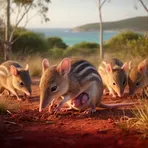
Pouched mammals like bandicoots that live in Australia and nearby islands
Compounds
- Specialized
Pouched mammals like bandicoots that live in Australia and nearby islands
Surface Forms
Morphology
Peramelidae = Perameles (opaque) = Perameles + idae
Formed from the genus name Perameles plus the technical taxonomic suffix '-idae' (family); this is a specialist scientific formation not readily deducible by an average B1 learner.
Etymology
Peramelidae comes from the genus Perameles plus the scientific ending -idae, which means 'family' for animals and appears in names like Canidae for dogs and Felidae for cats. It is the name for the family of bandicoots, marsupial animals with a 'pouch', so the name simply tells us these related animals belong to the same family.