
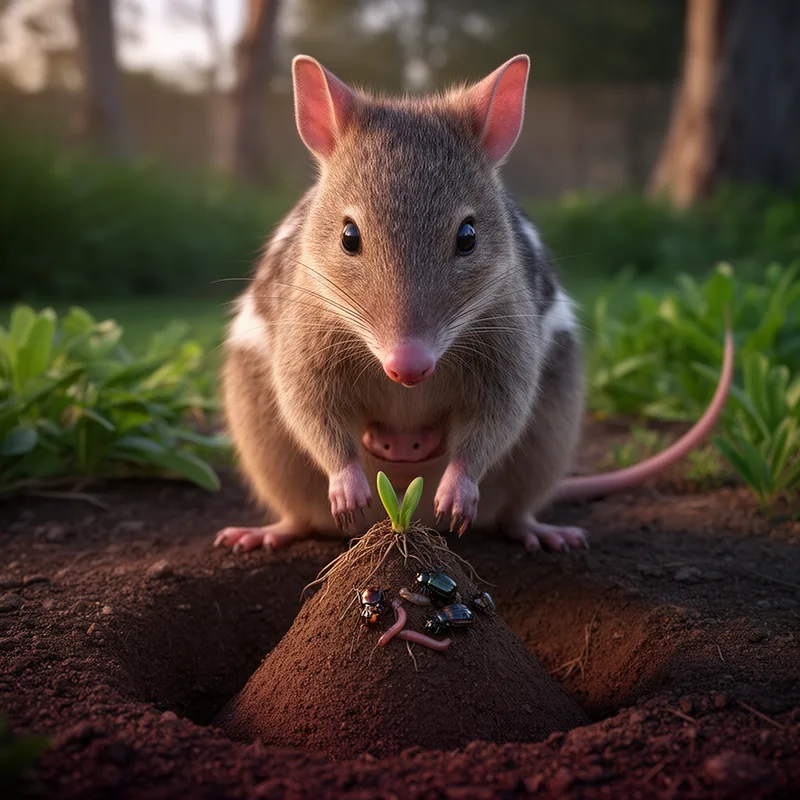
bandicoot
 2
8.2
2
8.2

- noun
- /ˈbændɪkuːt/
- Australian
- In the wild, the bandicoot primarily feeds on insects and plants, making it an important part of the ecosystem.
Examples
-
The bandicoot is a fascinating creature known for its agile movements and ratlike appearance.
-
I admire in particular, the bandicoot, the Rock wallaby and the duck-billed platypus.
-
When they looked down, they saw a bandicoot running.
Fiction book (1992) -
- Be careful of those bandicoots, sir.
-
It's part of the job with the bandicoots.
-
Several people had warned her that this big city had lots of rats and bandicoots.
Fiction book (1992) -
Many tour groups, including Fraser Explorer Tours, offer guided wildlife expeditions through the island's forest, which is dense with possums, bandicoots, and dingoes.
Blog text (10) -
While hiking in Australia, we spotted a bandicoot foraging for insects near the path.
Compounds

- Australian
A small Australian animal that carries its babies in a pouch with large leathery ears like a rabbit
Surface Forms
Etymology
The word bandicoot comes from a South Indian language, Telugu, and the old word pandikokku meant 'pig-rat' because the animal has a pig-like nose and a rat-like body. So bandicoot today means a small Australian animal that lives on the ground and carries its babies in a pouch.