
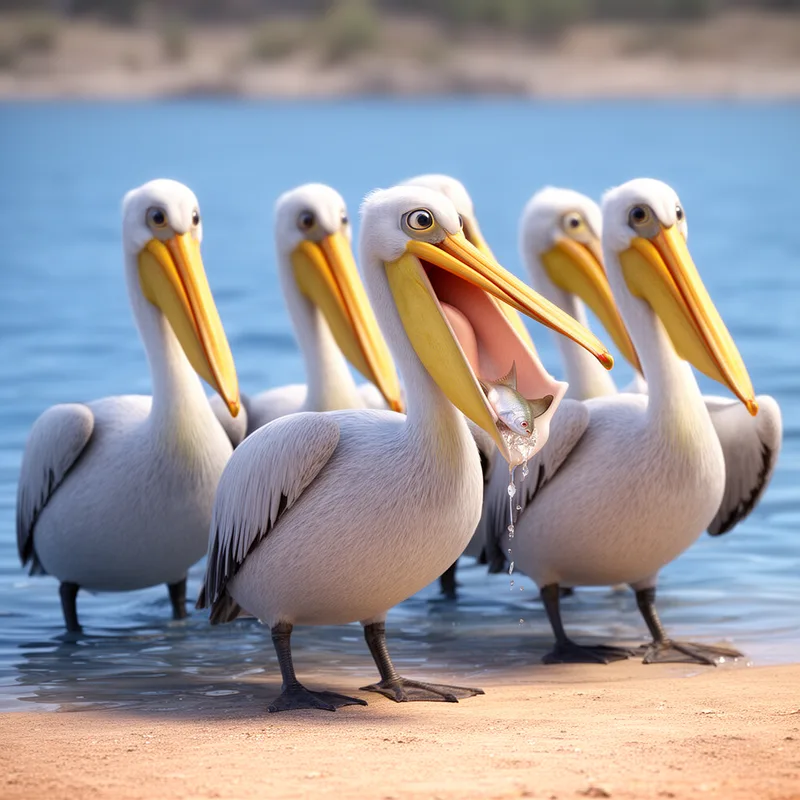
Pelecanus
- noun
- /ˈpɛlɪkənəs/
- Specialized
- One of the main features of this lake is the hundreds of white pelicans (Pelecanus onocrotalus) that stand between 60 and 70 inches tall and nest on top of dead tree stumps along the shorelines.
- pelican (Pelecanus)
Examples
-
To the far side of the lake is a group of white pelicans (Pelecanus onocrotalus) and batches of pink-backed pelicans, which are beautiful when they take off and climb, but because of their weight, they spiral around in a group until they reach the acquired height.
Academic text (2006) -
The Pelecanus is a large bird often found near wetlands, recognized for its long beak and ability to catch fish.
-
In coastal areas, the Pelecanus glides gracefully above the water while searching for food.
-
Birdwatchers enjoy observing the Pelecanus as it takes off with its impressive wingspan.
Synonyms

 23
2.4
23
2.4

A large water bird with a long beak and a pouch for catching fish
A family of large water birds that eat fish and have long bills and big throat pouches
Compounds
- Specialized
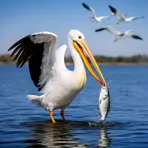
A large white bird with black wing feathers and a long beak that eats fish

- Specialized
A large white water bird with a long bill that lives by lakes in Europe, Asia, and Africa
Surface Forms
Etymology
Pelecanus comes from the old Greek word pelekan, which is linked to a word for 'axe' because a pelican's large bill looks a little like an axe. It is the scientific name for the group of large water birds we call pelican, so the name helps you remember their big, pouch-like bill.