
Pelecanidae
- noun
- /ˌpɛlɪˈkænɪdi/
- Specialized
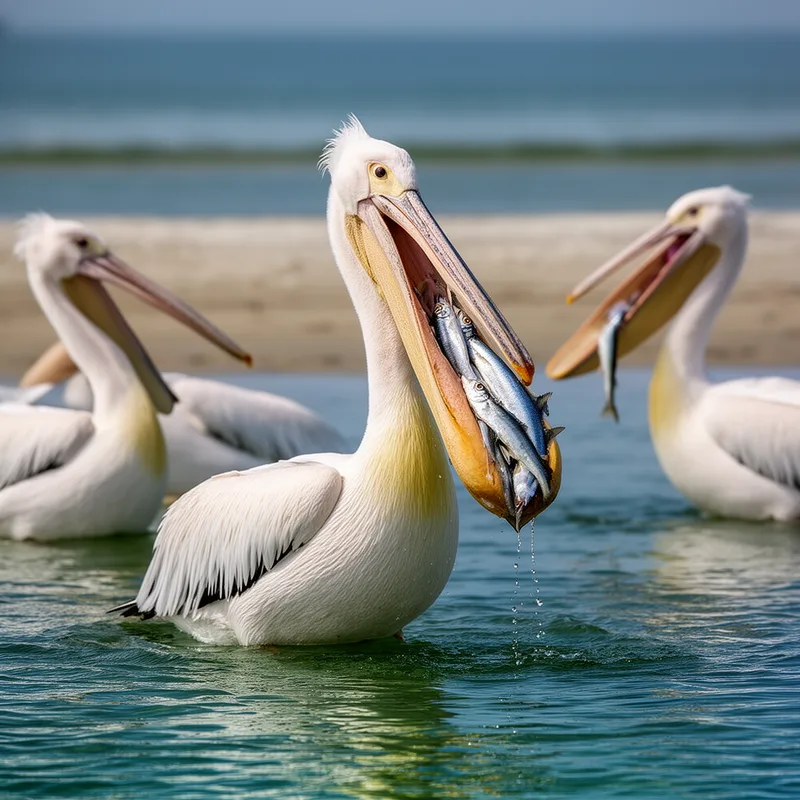
- Members of Pelecanidae are easily recognized by their long bills and throat pouches.
Examples
-
Known for their long bills, the members of Pelecanidae display unique adaptations for catching fish.
-
The family Pelecanidae includes some of the world's largest flying birds.
-
Scientists have conducted extensive research on the feeding habits of Pelecanidae.
-
The Pelecanidae family includes several species of pelicans.
-
Did you know that Pelecanidae are known for their unique throat pouches?
-
The family of large water birds known as Pelecanidae is popular for their impressive size and distinctive features.
-
Birdwatchers often flock to wetlands to observe the feeding behaviors of Pelecanidae, particularly during migration seasons.
Synonyms

 23
2.4
23
2.4

A large water bird with a long beak and a pouch for catching fish

A group of large water birds with a big throat pouch used for catching fish
Compounds
- Specialized
A group of large water birds with a big throat pouch used for catching fish
Surface Forms
Morphology
Etymology
Pelecanidae comes from an old Greek word pelekys meaning 'axe', because a pelican's long bill looks a bit like an axe head. The name is the family name used by scientists for the birds we call pelicans, large water birds with long bills and a big throat pouch.