
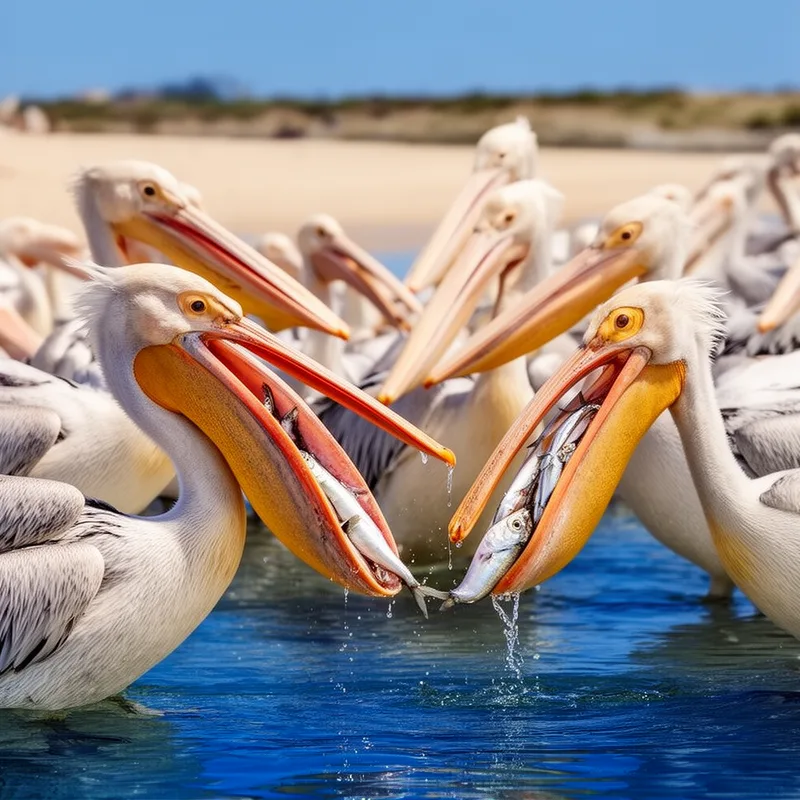
family Pelecanidae
- noun
- /ˈfɛmɪli pɛlɪˈkeɪnɪˌdeɪ/
- Specialized
- All eight species in the family Pelecanidae are known for their large throat pouches.
Examples
-
The family Pelecanidae is found on every continent except Antarctica.
-
Scientists recently studied the evolutionary history of the family Pelecanidae.
-
The family Pelecanidae includes various species of pelicans.
-
Did you know that the family Pelecanidae has members all over the world?
-
The family Pelecanidae includes all species of pelicans, known for their distinctive large beaks.
-
In North America, the family Pelecanidae is represented by several species that inhabit lakes and coastal areas.
-
Birdwatchers celebrate the family Pelecanidae for its impressive size and unique feeding habits.
Synonyms

A family of large water birds that eat fish and have long bills and big throat pouches
Surface Forms
Morphology
The phrase names a taxonomic grouping by combining 'family' (a scientific grouping) with 'Pelecanidae' (the pelican family), so its meaning is directly and compositionally derivable from the constituents. Taxonomic noun phrases of this form are cross-linguistically common and predictable, so a B1 learner who knows both words would understand it.
Etymology
The name family Pelecanidae comes from scientists' way of naming animals: family means a group of related species, and Pelecanidae comes from an old Greek word for 'pelican', a bird with a large throat pouch for catching fish. So the name simply means the group of birds we call 'pelicans'.

