
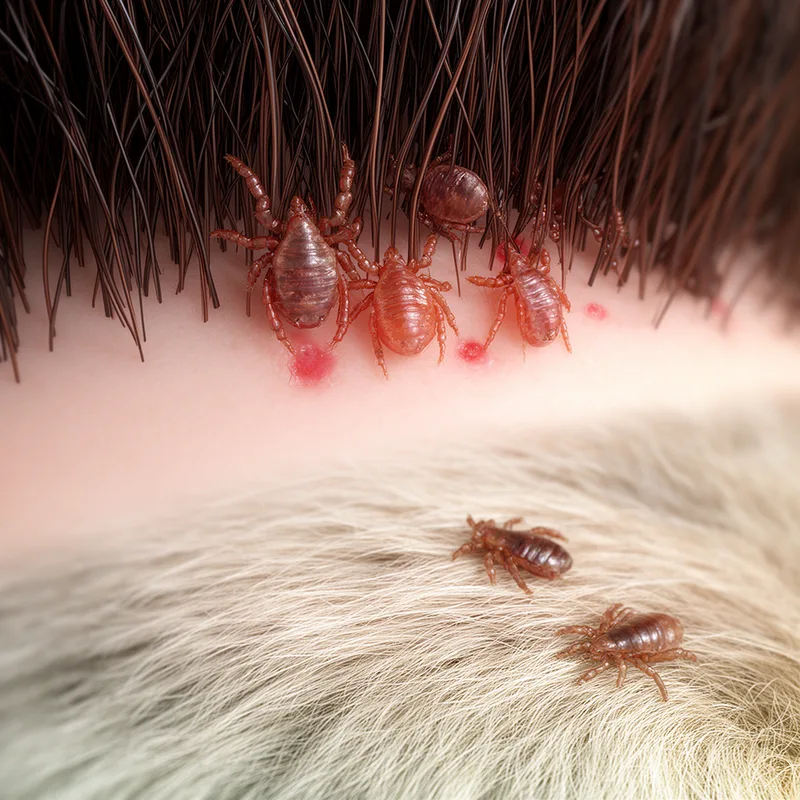
Pediculidae
- noun
- /ˌpɛdɪˈkjuːlɪdiː/
- Specialized
- Human lice are classified as members of the Pediculidae family, which includes several parasitic species.
Examples
-
Species of the Pediculidae family are notorious parasitic insects that affect humans and animals alike.
-
Researchers are studying the evolution of Pediculidae to better understand their resistance to treatment.
-
Head lice, a member of the Pediculidae, can be difficult to eliminate from schools.
-
The Pediculidae family includes various types of lice.
-
Did you know that Pediculidae can survive on clothing?
-
The presence of Pediculidae in a school can lead to outbreaks of head lice, which can be challenging to control.
-
Entomologists often study the Pediculidae family to develop effective treatments against lice infestations.
Synonyms
A group of lice that live on mammals and feed on their blood
Compounds
Surface Forms
Morphology
Pediculidae = Pediculus (opaque) = pedicul + idae
The formation uses a specialized scientific family suffix (-idae) and a Latin stem not recognizable as an English word to general learners.
Etymology
Pediculidae comes from the Latin pediculus, which means 'little louse' and is linked to pes 'foot', the same root you see in pedal or pedestrian. So, because these tiny insects move and cling with many small legs, Pediculidae is used today as the family name for lice.

