
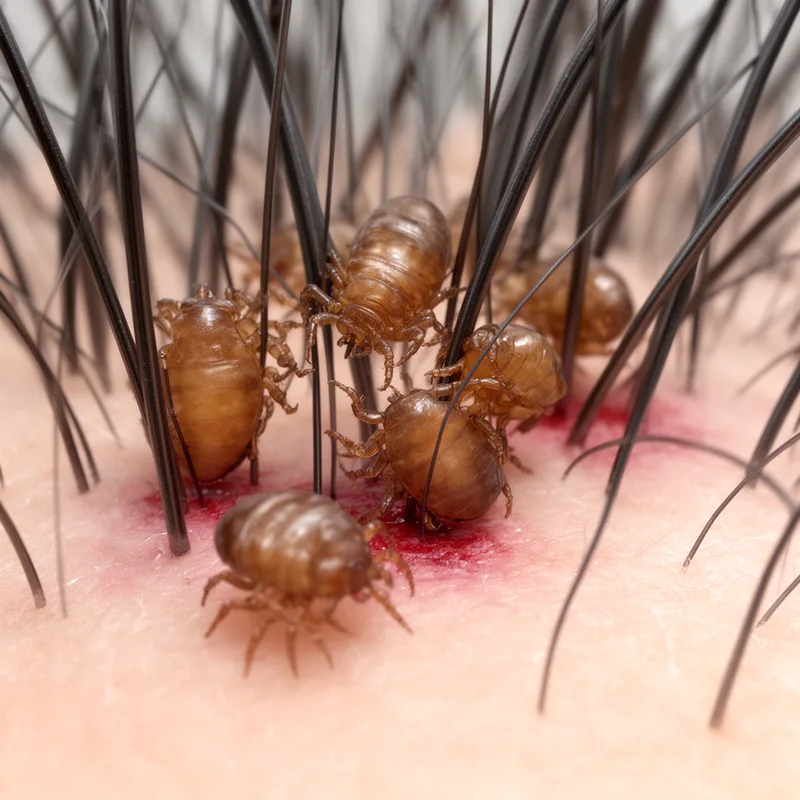
family Pediculidae
- noun
- /ˈfæmɪli pəˈdɪkjʊleɪdi/
- Specialized
- The family Pediculidae contains species that are obligate parasites of mammals, including humans.
Examples
-
The family Pediculidae includes the well-known human lice.
-
Scientists studied the evolutionary relationships within the family Pediculidae to better understand human lice.
-
Infestations caused by members of the family Pediculidae may require specialized treatment.
-
Did you know that family Pediculidae is a group of true lice?
-
The family Pediculidae includes the species that are infamous for causing head lice infestations in humans.
-
Research on the family Pediculidae reveals that these lice have adapted to their parasitic lifestyle on human hosts.
-
Members of the family Pediculidae are typically found clinging to human hair, where they can feed on blood.
Synonyms
A group of small insects that live on people and animals and feed on their blood
Surface Forms
Morphology
The phrase is fully compositional: 'family' denotes a taxonomic grouping and 'Pediculidae' is the taxon name, so combining them yields 'the family Pediculidae (a group of lice)'. This follows standard scientific naming patterns that are cross-linguistically familiar, so a learner who knows both constituents can infer the meaning.
Etymology
Family Pediculidae comes from the Latin word pediculus, which means 'louse', a tiny insect that clings to hair. So, the name simply labels the group of 'lice' that includes those that live on humans.

