
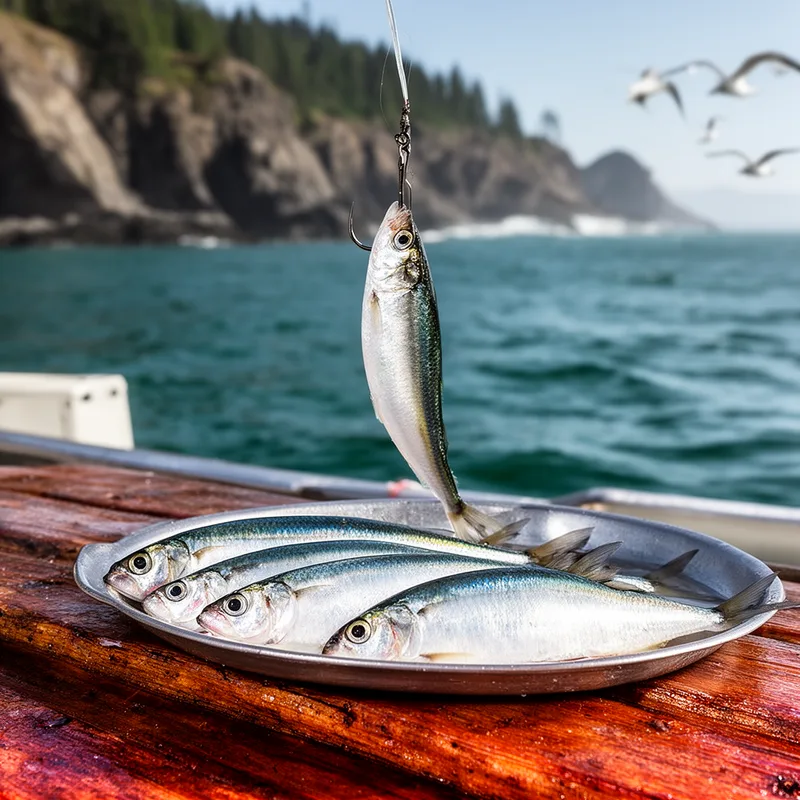
Pacific sardine
- noun
- /pəˈsɪfɪk ˈsɑrdin/
- US
- Researchers study the migration patterns of Pacific sardine to better understand their population dynamics.
- Pacific sardine and anchovy
Examples
-
During the summer months, many restaurants in California serve dishes featuring Pacific sardine.
-
The Pacific sardine fishery was the largest fishery in the Western Hemisphere during the 1930s and 1940s, with peak landings of over 700,000 t.
Academic text (2000) -
Pacific sardines have periodically been the most abundant fish of the California Current.
Academic text (2000) -
Anchovy abundance recently declined, while Pacific sardine abundance is rapidly growing and expanding northward.
Academic text (2000) -
Pacific sardine and Pacific mackerel, two important commercial species, were at very low levels of abundance at the time of the oil spill (Squire, 1983).
Academic text (1992) -
Zones having considerable crude oil release are included in the core areas for Pacific sardine, northern anchovy, Pacific mackerel, Pacific bonito, and jack mackerel.
Academic text (1992) -
West Coast fisheries selected were Pacific whiting, market squid, northern anchovy, Pacific herring, and Pacific sardine.
Academic text (2000) -
The Pacific sardine is a popular choice for bait among fishermen along the West Coast.
Synonyms

 60
1.3
60
1.3

A small oily fish often sold in cans and eaten
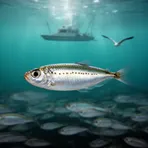
A small fish that lives off the Pacific coast of North America and is called the Pacific sardine
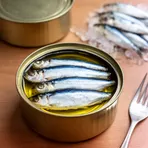
A small oily fish like a sardine often canned for food

A small oily fish often canned and eaten
Surface Forms
Morphology
The term combines 'Pacific' (pertaining to the Pacific Ocean) with 'sardine' (a small oily fish), so its meaning—a sardine species found in the Pacific—is directly derivable from the constituents. Geographic modifier + noun naming is a common, transparent compounding pattern across languages, so a B1 learner who knows both words will understand this MWE.
Etymology
Pacific sardine gets its name from place plus fish: Pacific shows where it lives and sardine comes from the island 'Sardinia', which was known for many small fish. So the name means a small edible fish from the Pacific, often canned or used as bait.