

Pacific Standard Time
 2
3.0
2
3.0

- noun
- US
- We woke up early our first morning (4 AM Pacific Standard Time) because we had very important plans.
- Pacific Standard Time p.m.
Examples
-
The meeting is scheduled for 3 PM Pacific Standard Time on Tuesday.
-
Show starts at 7:30 PM, Pacific Standard Time.
Blog text (10) -
It's now 10:42 Pacific Standard Time.
Blog text (14) -
Keep in mind that the Play Store runs on Pacific Standard Time as Google's HQ is located in California.
Blog text (6) -
7:00am Pacific Standard Time
-
Amazon.com and eBay were attacked on February 8 at 14:30 and 17:00 Pacific Standard Time, respectively.
Academic text (2003) -
Please remember that the deadline is 5 PM Pacific Standard Time this Friday.
-
The concert starts at 7 PM Pacific Standard Time, so don't be late!
Synonyms
 16
3.4
16
3.4
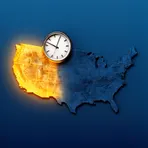
Time in the western United States that is eight hours behind Greenwich Mean Time
 4
2.8
4
2.8
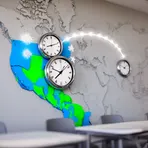
A time zone eight hours behind GMT used in the western United States and parts of Canada
Surface Forms
Morphology
The phrase combines a region label 'Pacific' with the compositional noun phrase 'standard time' (an established concept meaning the official clock for a region), so a learner who knows those constituents can infer it refers to the official time used in the Pacific region. This pattern (region + standard time) is cross-linguistically common, so the overall meaning is directly derivable from the parts for a B1 learner.
Etymology
Pacific Standard Time comes from the simple idea that people along the Pacific coast use one standard time so their clocks match. That's why the phrase means 'the time used on the U.S. and Canadian Pacific coast', which today is eight hours behind GMT.