

Oxytropis lambertii
- noun
- Specialized
- Wildflower enthusiasts can spot Oxytropis lambertii blooming on rocky slopes in spring.
Examples
-
Cattle sometimes avoid grazing on Oxytropis lambertii due to its toxic properties.
-
Scientists are studying Oxytropis lambertii to understand its effects on local ecosystems.
-
The Oxytropis lambertii is a beautiful plant found in the deserts.
-
Is the Oxytropis lambertii a type of locoweed?
-
Cattle sometimes avoid grazing on Oxytropis lambertii due to its toxic properties.
-
Wildflower enthusiasts can spot Oxytropis lambertii blooming on rocky slopes in spring.
-
Researchers are examining the role of Oxytropis lambertii in local plant diversity.
Synonyms
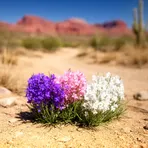
A plant that grows in small clumps with purple, pink, or white flowers in the dry southwest United States

A plant with purple, pink, or white flowers that can poison farm animals
Surface Forms
Morphology
Oxytropis + lambertii
This is a Linnaean binomial composed of a genus name + a species epithet, so a learner who knows 'Oxytropis' (a plant genus) will transparently infer that Oxytropis lambertii is a particular species of that genus. Although the epithet 'lambertii' is a proper name and does not convey details like flower color or native range, the core meaning ‘a species of Oxytropis’ is directly derivable from the constituents and is cross-linguistically recognizable.
Etymology
Oxytropis lambertii may come from old Greek words oxy meaning 'sharp' and tropis meaning 'keel' or 'boat-shaped', because the flower has a pointy, boat-like petal. The second part, lambertii, is a name that 'honors' a person named Lambert, so the whole name paints a simple picture of a plant that grows in small clumps with pointy, boat-shaped flowers and remembers who studied it.

