

purple locoweed
- noun
- Specialized
- Many ranchers worry about their cattle grazing on purple locoweed during the spring.
Examples
-
Scientists studied the toxic effects of purple locoweed on local livestock herds.
-
The bright blossoms of purple locoweed add color to the otherwise arid landscape.
-
The purple locoweed blooms beautifully in spring.
-
Farmers should be cautious of purple locoweeds in their fields.
-
Many ranchers worry about their cattle grazing on purple locoweed during the spring.
-
Scientists studied the toxic effects of purple locoweed on local livestock herds.
-
The bright blossoms of purple locoweed add color to the otherwise arid landscape.
Synonyms


 1
9.9
1
9.9
Plants in western North America that poison livestock when eaten
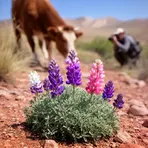
A small plant that grows in clumps with purple, pink, or white flowers in the southwestern United States

A plant that grows in small clumps with purple, pink, or white flowers in the dry southwest United States
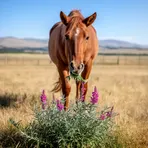
A plant from western North America that makes farm animals act nervous when eaten
Surface Forms
Morphology
This is a straightforward adjective + noun composition: 'purple' simply describes the color of a 'locoweed', so a B1 learner who knows both words can infer it refers to a locoweed that is purple. Detailed botanical or regional information (genus Oxytropis, locoism) goes beyond the basic compositional meaning but is not required to understand the phrase.
Etymology
Purple locoweed gets its name from its colour (purple) and from locoweed, a name that comes from the Spanish word 'loco' meaning 'crazy'. Ranch animals that ate the plant often acted wild or sick, so the name now points to a purple plant that can make livestock 'crazy'.