
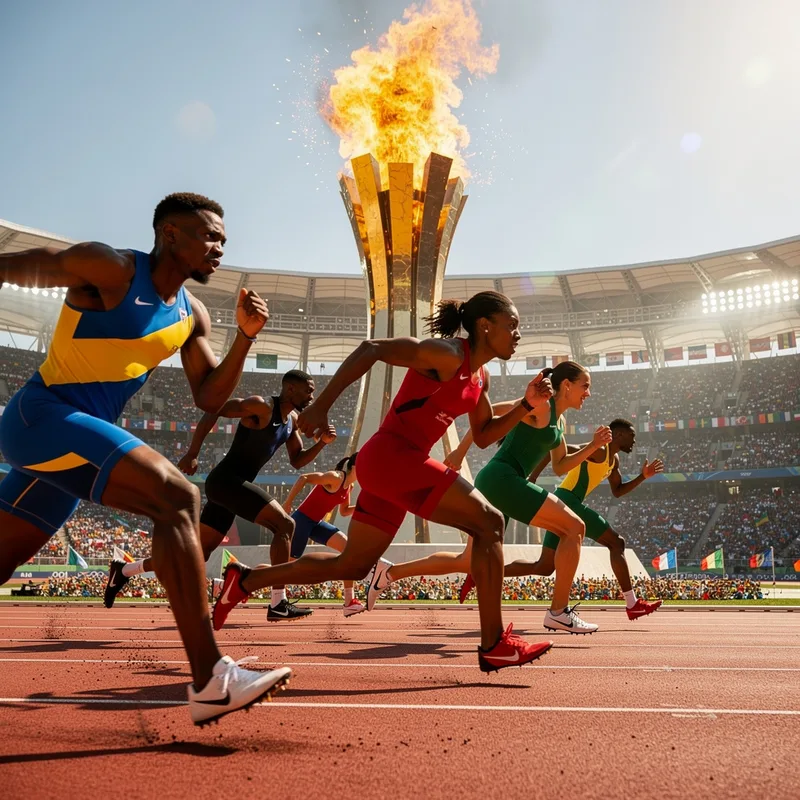
Olympics
 829
2.1
829
2.1

- proper noun
- /əˈlɪmpɪks/
- In two years, the summer Olympics would be held in Melbourne, Australia.
- Summer Olympics
- Winter Olympics
- host the Olympics
Loading YouTube…
Watch on YouTubeShe's been in three Olympics and a real superstar.
- She's been in three Olympics and a real superstar.
- And added on top of that is the Olympics only every four years.
- the US election, the Paris Olympics, the total solar eclipse.
- It's, it's like even what people don't get is getting to the Olympics is the win.
- For years, women in the Olympics were tested.
- I like a coach that says you want to win the Olympics.
- What is what is Putin trying to do with these Olympics?
- And, and I he, he fell short of making the Olympics himself.
- Well, we're going to be going to Paris for the Olympics.
- Do enjoy our time away and we'll see you after the Olympics.
- Who, who does a Special Olympics on Friday?
- So the colloquial nickname for this Olympics of combat is cock punch.
Examples
-
Who came in second at the 100-yard dash in the Olympics?
-
You'll see her in the next Olympics.
-
Probably play some card games, watch the Olympics, plan some travel.
-
Kids are going back to school, the Olympics are happening, people are travelling.
-
This is, I think, why the Olympics are this sort of enduring.
-
Many factory managers have agreed to slow production during the Olympics but not to shut down.
Academic text (2008) -
You know, we took four golds at the Olympics.
-
It was the most viewed sport in the whole Olympics in Tokyo.
-
Today, twenty-four countries redefine the scope of the Olympics in Latin America through these regional games.
Academic text (1995) -
Athletes from around the world will gather to compete in the Olympics next summer.
Synonyms
 42
1.1
42
1.1
A large international sports event held every four years where athletes from many countries compete
 6
6.3
6
6.3
A large international sports event held every four years in one country
Compounds
 20
2.5
20
2.5
An event where athletes from many countries compete every four years in winter sports like skiing and skating
 7
3.0
7
3.0
An international sports event for people with intellectual or physical disabilities
- Offensive
A competition where people claim they suffer more unfair treatment
- Offensive
An event where people focus on social justice causes more than art or sport
Surface Forms
Morphology
Etymology
Olympics comes from a place called Olympia in ancient Greece, where people held big sports games long ago. You can see the same root in Olympian, which means 'from Olympia' or 'very great', so the modern Olympics are big international sports events that copy those ancient games and happen every four years.