
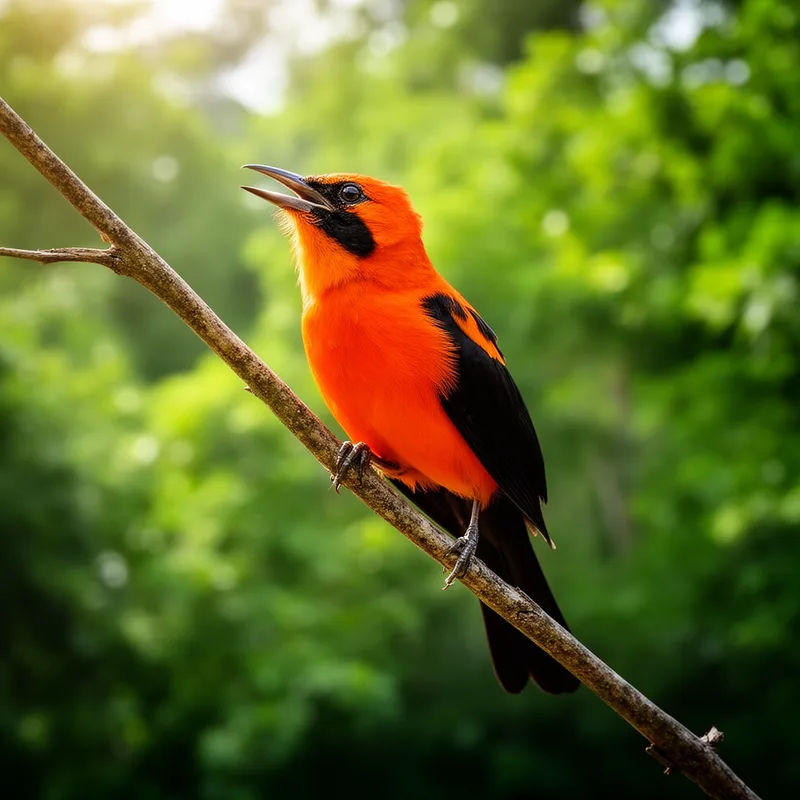
Old World oriole
- noun
- UK
- The male Old World oriole is known for its vivid orange and black feathers.
Examples
-
While birdwatching in India, we spotted an Old World oriole perched in the treetops.
-
Old World orioles are admired for their melodic songs in tropical forests.
-
The Old World oriole is known for its vibrant colors.
-
Have you ever seen an Old World oriole in the wild?
-
The male Old World oriole is known for its vivid orange and black feathers.
-
While birdwatching in India, we spotted an Old World oriole perched in the treetops.
-
Old World orioles are admired for their melodic songs in tropical forests.
Synonyms

A group of birds like orioles found in Africa, Europe, Asia, and Australia

A group of songbirds with bright feathers that live in Africa, Europe, Asia and Australia
Surface Forms
Morphology
The phrase denotes an oriole that comes from the 'Old World' (Europe/Asia/Africa), so its meaning is directly compositional: 'oriole' names the bird and 'Old World' functions as a geographic modifier. This geography+noun pattern is cross-linguistically common and a B1 learner who knows the constituent words can reasonably infer the intended meaning.
Etymology
Old World oriole gets its name from two clear images: oriole comes from a word meaning 'golden' because the male often has bright orange-yellow feathers, and Old World shows the bird is from Europe, Asia and Africa, the 'old continents'. So the name helps you picture a bright, singing oriole from those lands.

