

OPV
 1
6.1
1
6.1

- noun
- Specialized
- Fortunately, Polish American microbiologist Albert Sabin was creating the oral polio vaccine, or OPV, at the same time.
- bivalent OPV
Examples
-
Subsequently, Albert Sabin developed another live, oral polio vaccine (OPV).
Blog text (3) -
Monovalent OPV1 and bivalent OPV were used to control circulating WPV1.
Academic text (2013) -
Trivalent OPV was used in these campaigns.
Academic text (2013) -
The downside is that there is a risk of VAPP from OPV.
Blog text (5) -
The best aspects of OPV are that a) it is about as close to 100% effective as you can get and b) immunity is passed on to others in the household.
Blog text (5) -
Three doses of live-attenuated OPV produce protective antibodies to all three poliovirus types in more than 95% of recipients.
Blog text (3) -
This is similar to how the OPV used to be the #1 polio vaccine in the U.S. until wild type infections decreased to the point that the risks from OPV were no longer justified, so we switched to IPV.
Blog text (5) -
It now seems necessary to synchronize the phase-out of OPV to minimize the emergence of circulating VDPVs, particularly circulating VDPV2.
Academic text (2013) -
Reliance on monovalent OPV1, monovalent OPV3, and bivalent OPV in supplemental vaccination activities has contributed to the emergence of VDPV2.
Academic text (2013) -
The live oral vaccine known as OPV has helped reduce polio cases worldwide.
Synonyms

A medicine people take by mouth that contains weakened polio virus to protect them from polio
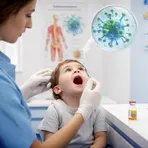
A vaccine given by mouth that has a weakened live virus to protect against polio

A medicine taken by mouth that contains three weakened live polio viruses to protect against polio
A shot that protects people from polio
Surface Forms
Etymology
OPV is a short form of oral, polio, and vaccine, so it means a 'vaccine by mouth' against polio. It uses a live but 'weakened' polio virus to teach the body to fight the disease, which is why OPV is given by mouth to prevent polio.