
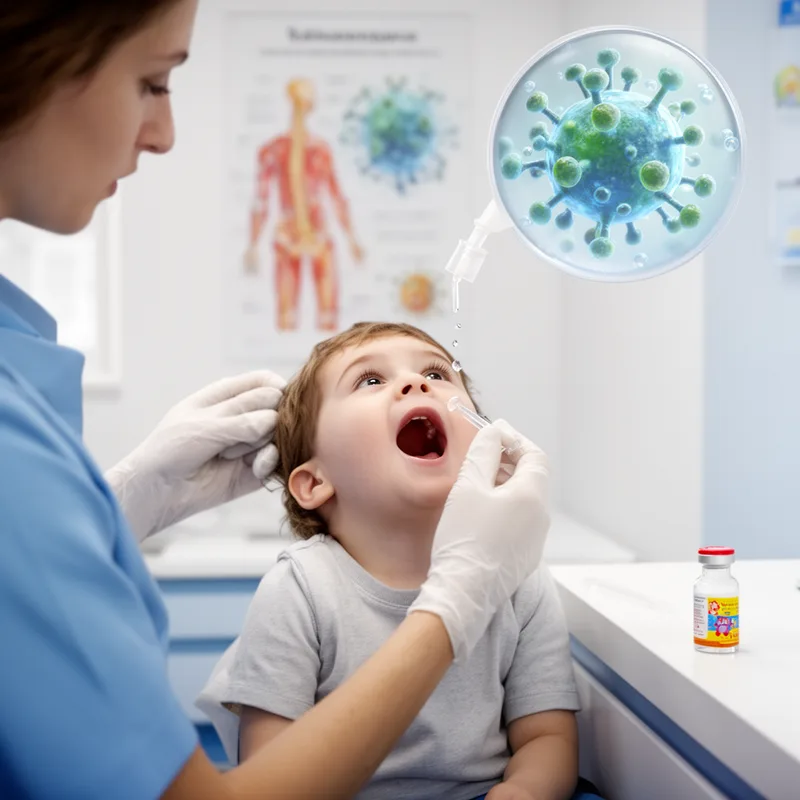
Sabin vaccine
- noun
- /ˈseɪbɪn ˈvæksin/
- Specialized
- In 1961, health experts agreed that the Sabin vaccine was crucial for preventing poliomyelitis in children.
Examples
-
The Sabin vaccine is given orally and contains a weakened form of the poliovirus to boost immunity.
-
Those two—the development of the Salk and Sabin vaccines—resulted in products that were potentially worth billions in a market desperate for a cure, but were marketed by commercial companies at very small profits.
Blog text (5) -
Many countries adopted the Sabin vaccine in their immunization programs to combat polio outbreaks.
Synonyms

 1
6.1
1
6.1

A vaccine given by mouth that uses a weak form of the virus that causes polio to prevent the disease

A medicine people take by mouth that contains weakened polio virus to protect them from polio

A medicine taken by mouth that contains three weakened live polio viruses to protect against polio
A shot that protects people from polio
Surface Forms
Morphology
Sabin + vaccine
The compound is compositionally a proper name + noun, so a learner who knows 'Sabin' as a name and 'vaccine' will infer it is a type or brand of vaccine associated with Sabin. However, the specific properties (that it is oral, live‑attenuated, and for polio) are not recoverable from the constituents alone and require prior or specialized knowledge.
Etymology
Sabin vaccine is named after the doctor Albert Sabin, who made a weakened live polio virus that people could take by mouth. Because this version was given 'orally' rather than by injection, the name Sabin vaccine now means the oral polio vaccine used to protect people from polio.