
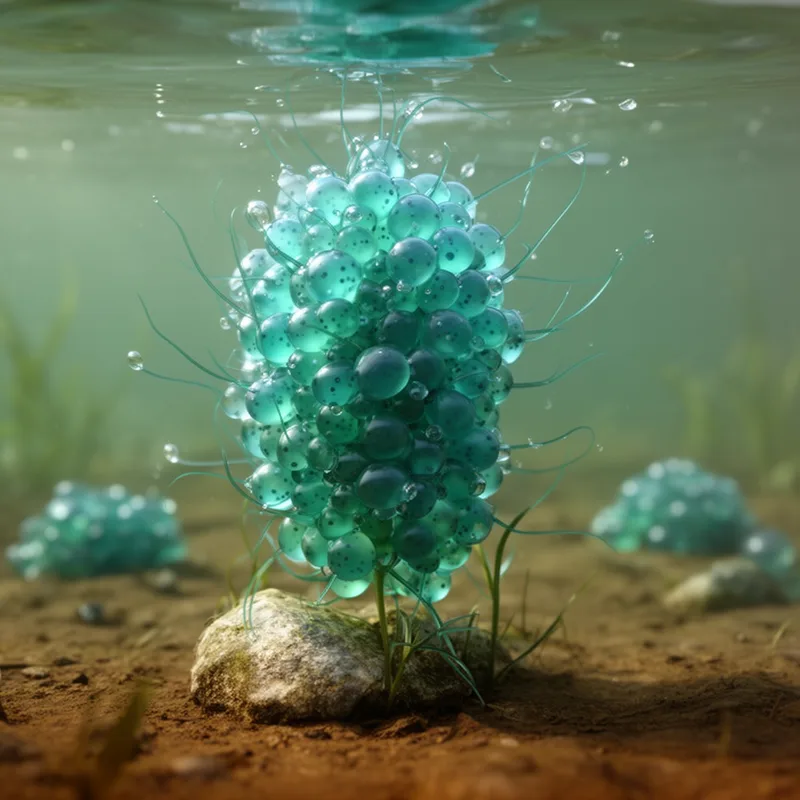
Nostocaceae


 1
9.9
- noun
- /nɒstəˈkeɪʒiː/
- Specialized
- Nostocaceae are commonly found in freshwater environments, forming colonies that can be seen as green spots in ponds.
Examples
-
Nostocaceae are used in traditional cuisines as a source of nutrition in certain cultures.
-
Azolla, a freshwater plant, is grown together with microsymbion Anabaena (chlorophyceae from family Nostocaceae).
Academic text (1998) -
Research has shown that members of the Nostocaceae family can improve soil fertility through their nitrogen-fixing capabilities.
Synonyms
A group of blue-green algae that live in freshwater and soil and form colonies or thin threads
Compounds
- Specialized
A group of blue-green algae that live in freshwater and soil and form colonies or thin threads
Surface Forms
Morphology
Nostocaceae = Nostoc (semi-transparent) = Nostoc + aceae
Formation from the genus name 'Nostoc' plus the standard biological family suffix '-aceae' follows a regular taxonomic pattern but relies on specialized scientific knowledge of Latinized suffixes.
Etymology
Nostocaceae comes from the scientific genus name Nostoc plus the family ending -aceae, which means 'family of'. So Nostocaceae simply names the family that includes Nostoc, the blue-green algae known for jelly-like colonies in freshwater.