
family Nostocaceae
- noun
- /ˈfæmɪli nɒstəˈkeɪʃi/
- Specialized
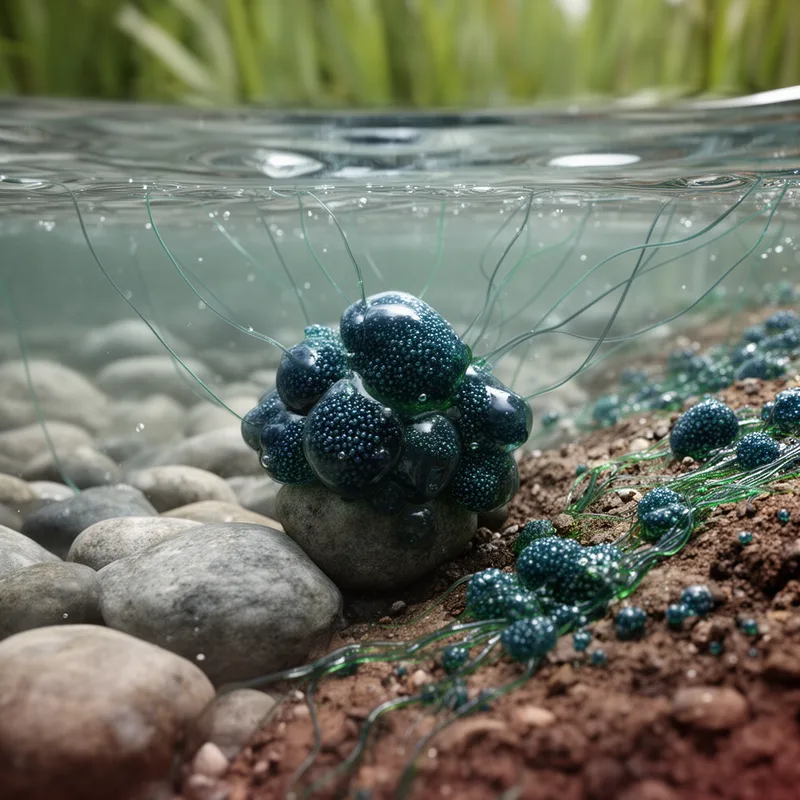
- The distinctive gelatinous colonies are characteristic of the family Nostocaceae.
Examples
-
Researchers discovered a new species within the family Nostocaceae in a remote mountain pond.
-
Many members of the family Nostocaceae can fix atmospheric nitrogen, benefiting their ecosystems.
-
The family Nostocaceae includes various species of cyanobacteria.
-
Many researchers study the family Nostocaceae for its ecological importance.
-
Many members of the family Nostocaceae can fix atmospheric nitrogen, benefiting their ecosystems.
-
Researchers discovered a new species within the family Nostocaceae in a remote mountain pond.
-
The distinctive gelatinous colonies are characteristic of the family Nostocaceae.
Synonyms


 1
9.9
A group of blue-green algae that grow in colonies or filaments in fresh water
Surface Forms
Morphology
This is a straightforward taxonomic noun phrase combining 'family' (a scientific grouping) with the taxon name 'Nostocaceae' (a family of blue‑green algae), so the meaning — the group of cyanobacteria called Nostocaceae — is directly derivable from the parts. The compositional pattern 'family + taxon name' is common in scientific language and cross‑linguistically familiar, making it transparent to learners who know both constituents.
Etymology
The name family Nostocaceae comes from the group name Nostoc plus the ending -aceae, which means 'family'. One popular idea is that Nostoc comes from a word for a 'knot' or 'cluster', because these blue-green algae often make round, jelly-like clumps, so the name helps you remember this family by their knotted, clumpy look.