

Nigella sativa


 1
8.5
1
8.5
- noun
- /nɪˈɡɛlə ˈsɑːtɪvə/
- Specialized
- Nigella sativa is used for taste and flavor in many foods, bread, and pastries.
Examples
-
Nigella sativa oil is a diuretic and affects menstruation in women, and it generates a discharge of saliva.
Blog text (27) -
Nigella sativa contains a number of substances important to the human body.
Blog text (27) -
Chemical analysis has shown that it contains the Nigella sativa volatile oil in the material Alnejalon.
Blog text (27) -
Nigella sativa oil is added to coffee and tea at three points, where it works as an effective analgesic oil repellent and for intestinal wind.
Blog text (27) -
Nigella sativa contains a number of substances and volatile oils important to the human body, as well as a number of fixed-interest oils.
Blog text (27) -
The seeds of Nigella sativa are often used as a spice in Indian and Middle Eastern cuisine.
-
Many people sprinkle Nigella sativa on their bread for added flavor and health benefits.
-
Nigella sativa, commonly known as black cumin, can be found in various dishes for its unique taste.
Synonyms

An herb from the Mediterranean with small strong seeds used as a spice like caraway
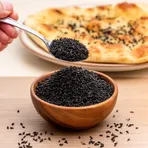
Small dark seeds from a Mediterranean plant that people use as a spice like caraway
Surface Forms
Morphology
The binomial is compositional: 'Nigella' names the herb/genus and 'sativa' is a species epithet meaning 'cultivated', so a learner who knows both constituents can infer it denotes a (cultivated) Nigella plant. While the full botanical family or culinary uses are not specified by the name, the core meaning 'a species of Nigella (a plant)' is directly derivable and follows standard taxonomic naming conventions.
Etymology
Nigella sativa comes from Latin words that describe the plant: Nigella refers to its small dark seeds (from the Latin for 'black') and sativa means 'sown' or 'cultivated'. So the name helps you remember a cultivated plant known for its black seeds used as a spice.