
Nicholas II
 1
7.0

- proper noun
- /ˈnɪkələs ˈðə ˈsɛkənd/
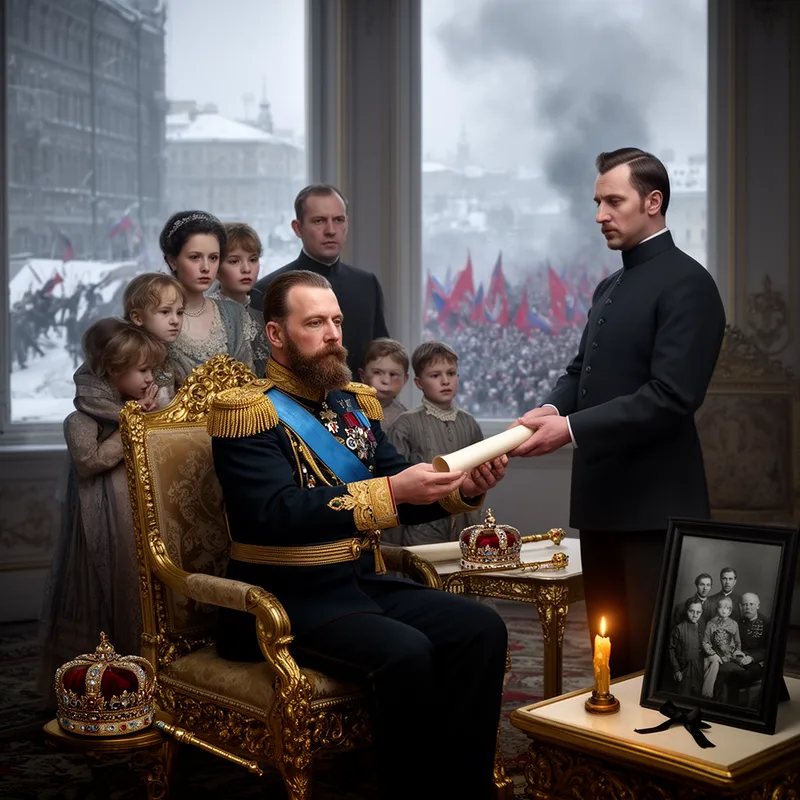
- Nicholas II was forced to abdicate the throne at the height of the Russian Revolution.
Examples
-
The tragic fate of Nicholas II and his family shocked the world in 1918.
-
The reign of Nicholas II ended in 1917.
-
Historians continue to debate the legacy of Nicholas II in Russian history.
-
Did Nicholas II really abdicate the throne?
-
Nicholas II was executed with his family after being captured during the Russian Revolution.
-
The reign of Nicholas II was marked by significant political upheaval and social unrest.
-
Many historians argue that the decisions made by Nicholas II contributed to the downfall of the monarchy.
Synonyms


 1
8.6
The last emperor of Russia who gave up his throne in 1917 and was killed with his family
Surface Forms
Morphology
Nicholas + II
A learner who knows 'Nicholas' (a personal name) and 'II' (the Roman numeral for two) can transparently infer 'Nicholas the second' or that this refers to a second person of that name (often a ruler), but they cannot derive the specific historical identity or facts (e.g. 'last Emperor of Russia', abdication, execution) from the parts alone. The ordinal composition is clear cross-linguistically, yet the detailed referential information requires extra world-knowledge.
Etymology
Nicholas II was the last emperor of Russia who was forced to give up the throne in the 1917 Revolution and later killed with his family. Because of this tragic story, his name often brings to mind the 'end of the Russian monarchy' and a ruler who 'lost power'.