
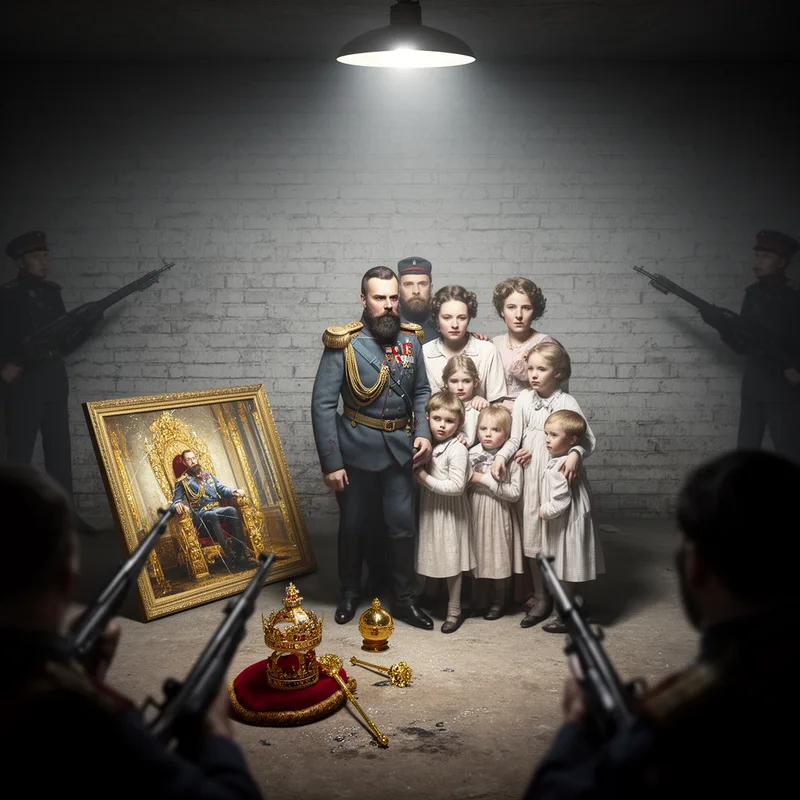
Nicholas II of Russia


 1
8.6
- proper noun
- Nicholas II of Russia was the last czar, abdicating the throne after the February Revolution of 1917.
Examples
-
The tragic fate of Nicholas II of Russia and his family is remembered as the end of the Romanov dynasty.
-
The execution of Nicholas II of Russia and his family marked a significant moment in Russian history.
-
Historians often debate whether Nicholas II of Russia could have prevented the Russian Revolution.
-
The reign of Nicholas II of Russia ended in tragedy.
-
Did Nicholas II of Russia really believe he could maintain absolute power?
-
Nicholas II of Russia was the last emperor of Russia, forced to abdicate during the 1917 revolution.
-
Many consider Nicholas II of Russia a tragic figure due to his abdication and execution.
Synonyms
 1
7.0
The last Emperor of Russia who gave up the throne during the 1917 revolution and was killed with his family
Surface Forms
Morphology
The components 'Nicholas' + 'II' + 'of Russia' transparently indicate a person named Nicholas who is the second (II) associated with Russia, so a learner would infer it refers to a Russian ruler named Nicholas II. However, the specific historical details in the provided definition (that he was the last emperor, forced to abdicate in 1917 and executed in 1918) are world-knowledge and not derivable from the constituent words alone, making the expression only partially transparent.
Etymology
Nicholas II of Russia was the last emperor of Russia. He was forced to give up the throne in 1917 during the Russian Revolution and was later killed with his family, so his name reminds people of the end of the Romanov rulers.