
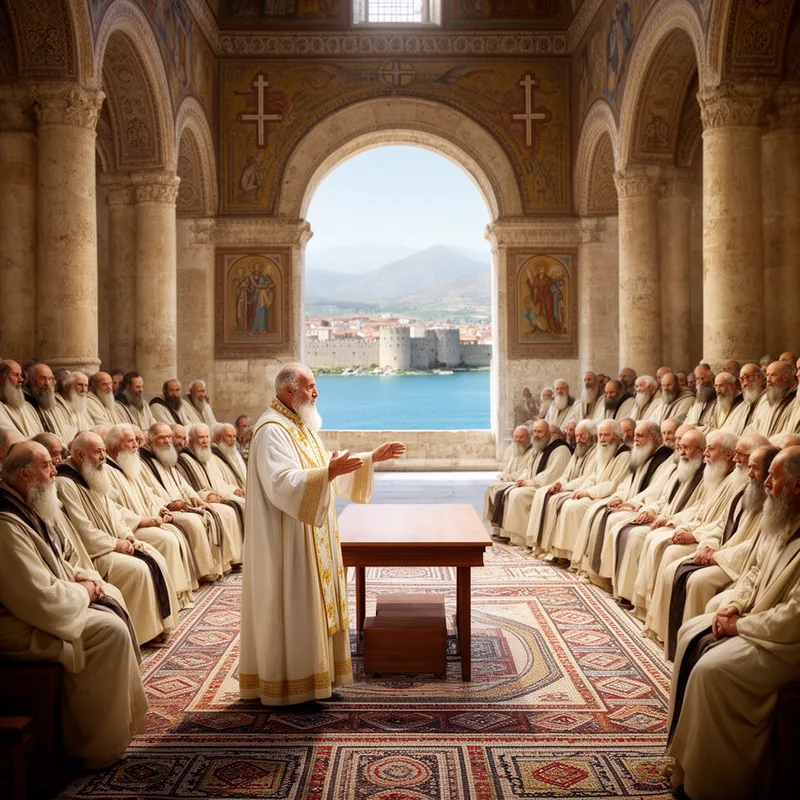
Nicene
- adjective
- /naɪˈsiːn/
- Specialized
- During the council in Nicaea, the Nicene Creed was established to unify the church's doctrine.
Examples
-
In other words, the Nicene Creed defined orthodoxy.
-
They wrote what has come down to be called the Nicene Creed.
-
We we we site the Nicene Creed, and we believe in one holy.
-
Here on this shelf, in addition to an old family Bible, you see the collected works of the Anta and post Nicene Church fathers.
-
Think about the, the Nicene Creed, You know, I believe in the XYZ comes towards the end, resurrection of the, the dead.
-
Accepting the biased accounts of Nicene Christian authors such as Victor Evita.
-
The Nicene Creed laid the foundation for many Christian beliefs.
-
The teachings of the Nicene Church fathers continue to influence modern Christianity.
Synonyms

About the ancient city of Nicaea and its early Christian church
Compounds


Surface Forms
Morphology
Etymology
Nicene comes from the ancient city Nicaea, where important church meetings called 'councils' were held in what is now Turkey. That's why Nicene is used for things from those meetings, like the Nicene Creed, a key statement of Christian belief.