
Nicene Creed
 1
8.8
1
8.8

- noun
- /naɪˈsiːn krid/
- Formal
- Taking his own approach to this interplay of unity and diversity in the Trinity, Peacocke, in his affirmation of the one God as Creator, points out the Nicene Creed's identification of the Father as the "maker of heaven and earth," of the Son as the one "through whom all things were made," and of the Holy Spirit as the "giver of life."
Examples
-
Hilary believes that by using homousios, the Nicene Creed counters this theology.
Academic text (2007) -
In other words, the Nicene Creed defined orthodoxy.
-
One of the changes has affected the Nicene Creed.
Academic text (2011) -
In the process, the Nicene Creed was born.
Blog text (3) -
The Nicene Creed names the Spirit as "the Lord, the Giver of Life."
Academic text (2000) -
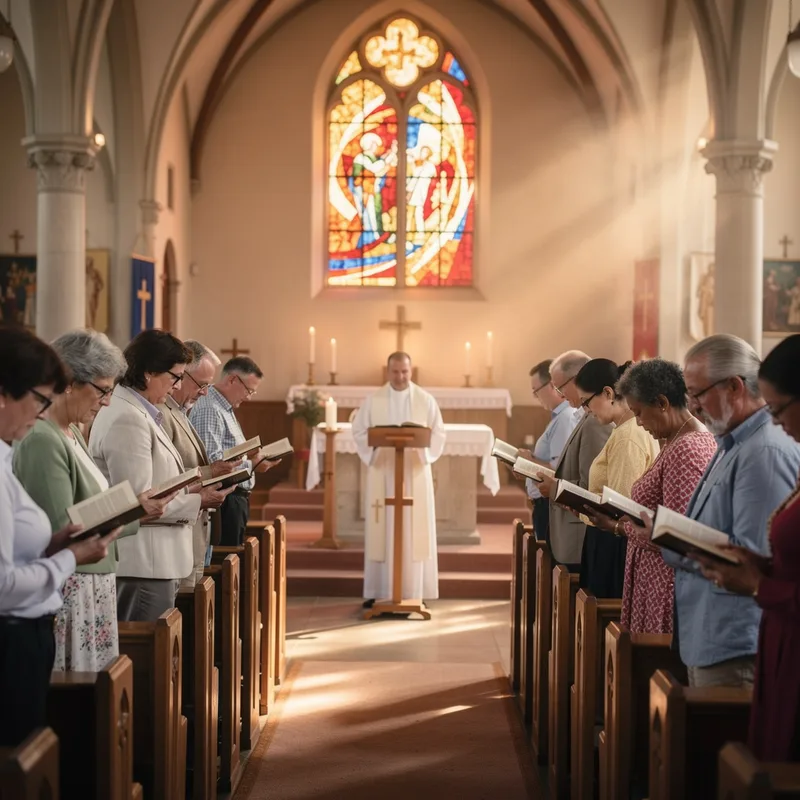
It was a powerful moment when bishops and the whole assembly sang the Nicene Creed in that massive church.
Academic text (2013) -
According to both the Apostles' Creed and the Nicene Creed, Jesus is "seated at the right hand of the Father" and he "will come again" to judge the living and the dead.
Academic text (2006) -
During Sunday service, we recite the Nicene Creed to affirm our shared beliefs.
-
The Nicene Creed was established to clarify the fundamental tenets of Christian faith.
-
Many churches include the Nicene Creed in their liturgy as a declaration of faith.
Surface Forms
Morphology
The phrase literally combines 'Nicene' (pertaining to Nicaea) with 'creed' (a statement of beliefs), so a learner who knows both constituents can infer it refers to a creed associated with Nicaea. Although full historical details (the Council of Nicaea and doctrinal specifics) are encyclopedic, the core meaning as a formal statement of faith is compositionally predictable.
Etymology
Nicene Creed comes from the city of Nicaea, where Christian leaders met in 325 to write a clear Creed. The word Nicene shows the place it came from, and Creed means a 'statement of faith'. That's why Nicene Creed now means the formal 'statement of faith' many churches say in worship.