
Neopaganism


 1
9.0
- noun
- /ˌniːoʊˈpeɪɡənɪzəm/
- Modern witchcraft and the bulk of popular neopaganism today can be traced directly or indirectly to the work of one man: Gerald Brosseau Gardner, an Englishman who spent most of his career as a civil servant and plantation owner in South and Southeast Asia.
Examples
-
More specifically, Goddess devotees are part of a growing tendency towards "neopaganism": the increasingly popular notion that the wisdom of ancient and/or non-Western cultures can be appropriated to provide solutions to the most intractable problems afflicting contemporary society.
Academic text (1993) -
It must be done carefully—rather than say, promoting neopaganism as a way to explain the European New Right, Southern nationalists could use the Southern Agrarians as a take-off point.
Blog text (29) -
But even Neopaganism, which is full of ritual, could improve in this area, I think.
Blog text (32) -
In fact, these two manifestations of neopaganism present analogous challenges to the academic intellectual tradition as we have known it.
Academic text (1993) -
A defrocked Cistercian, he was a member of the List Society who developed an even more idiosyncratic version of neopaganism.
Academic text (1993) -
Again, we see the symbiosis of radical feminism with occult neopaganism.
Academic text (1993) -
By the same token, Goddess spirituality is part of the larger phenomenon of New Age neopaganism, and it is instructive to see what else is embraced in that tradition.
Academic text (1993) -
Oftentimes, indigenous African beliefs that underpin respect for environmental ecology are prejudicially construed as "neopaganism" or "pantheism." This prejudice misses the point.
Academic text (2010) -
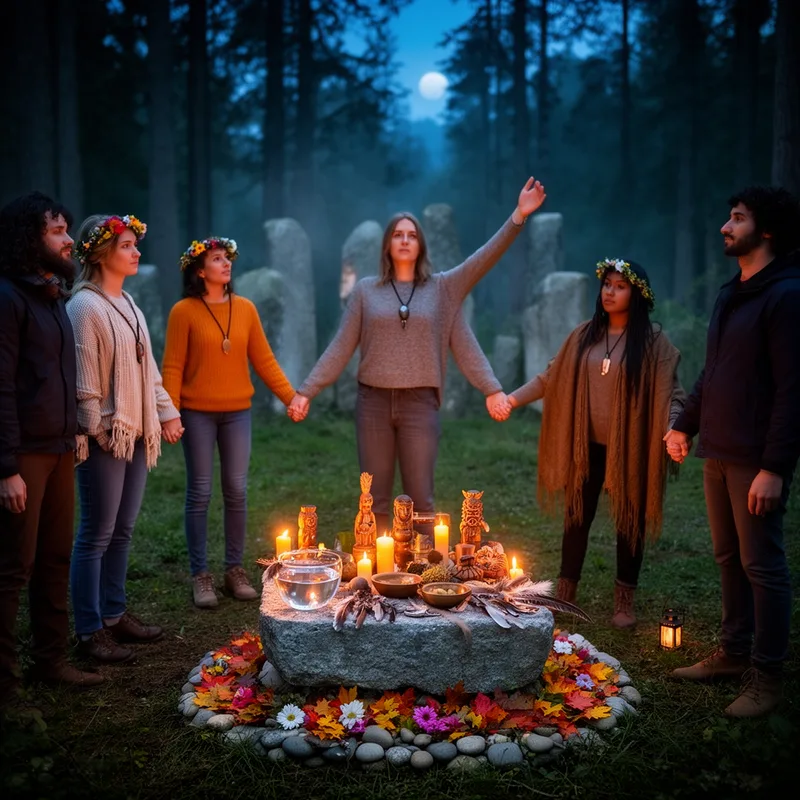
This community practices Neopaganism by honoring the earth and celebrating seasonal festivals.
-
Many followers of Neopaganism engage in rituals that connect them to ancient traditions.
Surface Forms
Morphology
Etymology
Neopaganism starts with neo-, which means 'new', and adds pagan, a word that once meant a 'country person' and later named old, nature-based, non-Christian beliefs. So Neopaganism is the 'new' return to those ancient, nature-focused beliefs.