
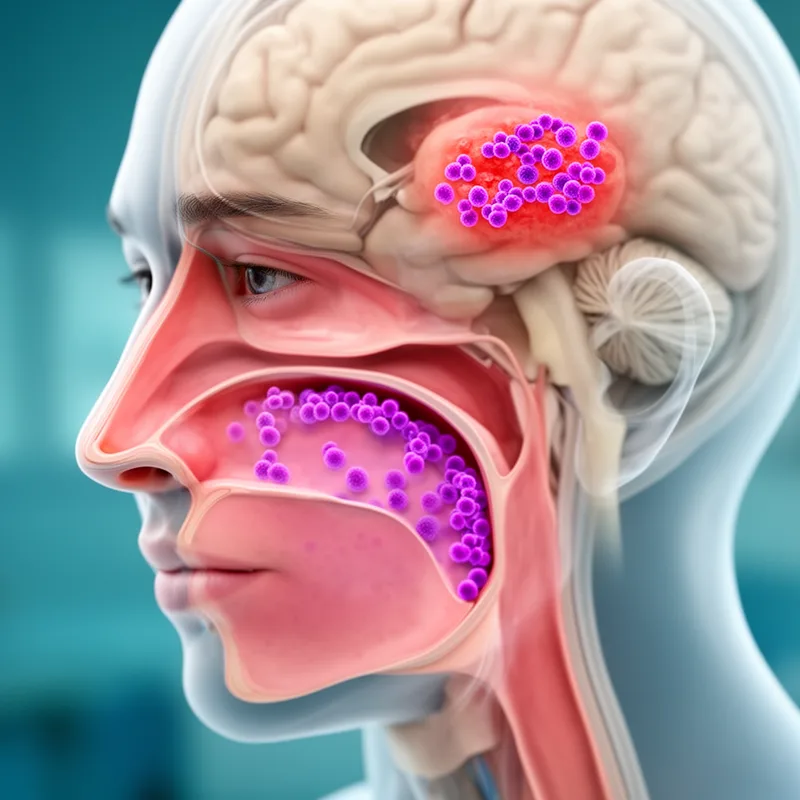
Neisseria meningitidis


 1
8.4
- noun
- /naɪˈsɛr.i.ə ˌmɛn.ɪnˈdʒɪt.ɪs/
- Specialized
- Vaccines are available to protect against Neisseria meningitidis infections in children and adults.
Examples
-
Outbreaks of Neisseria meningitidis can occur in crowded places like college dormitories.
-
Doctors quickly identified Neisseria meningitidis as the cause of the patient's sudden fever and headache.
-
The bacterium Neisseria meningitidis is known to cause meningitis.
-
Infections caused by Neisseria meningitidis can be severe.
-
Meningococcal disease is an acute, potentially severe illness caused by the bacterium Neisseria meningitidis.
-
Neisseria meningitidis is a leading cause of bacterial meningitis and sepsis in the United States.
-
Neisseria meningitidis causes the life-threatening diseases meningococcal meningitis and meningococcal septicemia.
Synonyms
 2
9.3
A germ that can cause meningitis and other serious infections in people
Surface Forms
Morphology
Neisseria + meningitidis
The compound is a Linnaean binomial: 'Neisseria' indicates a bacterial genus and the species epithet 'meningitidis' is transparently related to 'meningitis', so a learner who recognises both parts can infer it is a bacterium associated with meningitis. However, species names use Latinized morphology and taxonomic conventions that are specialized, so an average B1 learner without biomedical or Latin knowledge would not reliably derive the full meaning.
Etymology
Neisseria meningitidis takes its name from the doctor Albert Neisser who first found the germ, and the first part, Neisseria, is his name while the second part, meningitidis, points to the thin covers around the brain called 'meninges'. That's why the full name tells you it is a germ that can make those covers swell in 'meningitis' and cause that illness.