

Myricaria germanica
- noun
- Specialized
- The Myricaria germanica thrives along riverbeds with sandy soils in Central Europe.
Examples
-
In spring, the Myricaria germanica showcases its pinkish flowers, attracting pollinators to the river shore.
-
Botanists are concerned about the declining populations of Myricaria germanica due to habitat loss.
-
We identified several Myricaria germanica shrubs growing near the banks of the Danube.
-
The Myricaria germanica thrives in sandy riverbanks.
-
Many gardeners appreciate the beauty of Myricaria germanica.
-
The Myricaria germanica is often found along the sandy banks of rivers, providing shelter for various wildlife.
-
Due to its resilience, Myricaria germanica can survive in the harsh conditions of gravelly riverbanks.
Synonyms
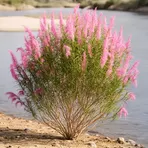
A bush with thin branches and many small leaves that often has pink flowers and grows near rivers or coasts
Surface Forms
Morphology
Myricaria + germanica
This is a Linnaean binomial (genus + specific epithet). If a learner knows 'Myricaria' as a genus of shrubs, then 'Myricaria germanica' transparently denotes a species of that genus; the epithet 'germanica' simply indicates association/origin (Latin for 'German') and does not change the basic meaning. The compositional pattern (genus name + species epithet = a particular shrub) is regular and cross-linguistically consistent, so a learner who knows the constituents will understand it denotes a shrub species.
Etymology
Myricaria germanica is a scientific name made of two parts: the group name Myricaria and the type name germanica. The word germanica simply means 'from Germany', so imagine this Myricaria shrub growing on riverbanks in German lands. That's why the name tells you it is the Myricaria plant associated with German regions.

