
Monoceros
- noun
- /ˌmɒnəˈsɪrəs/
- Archaic
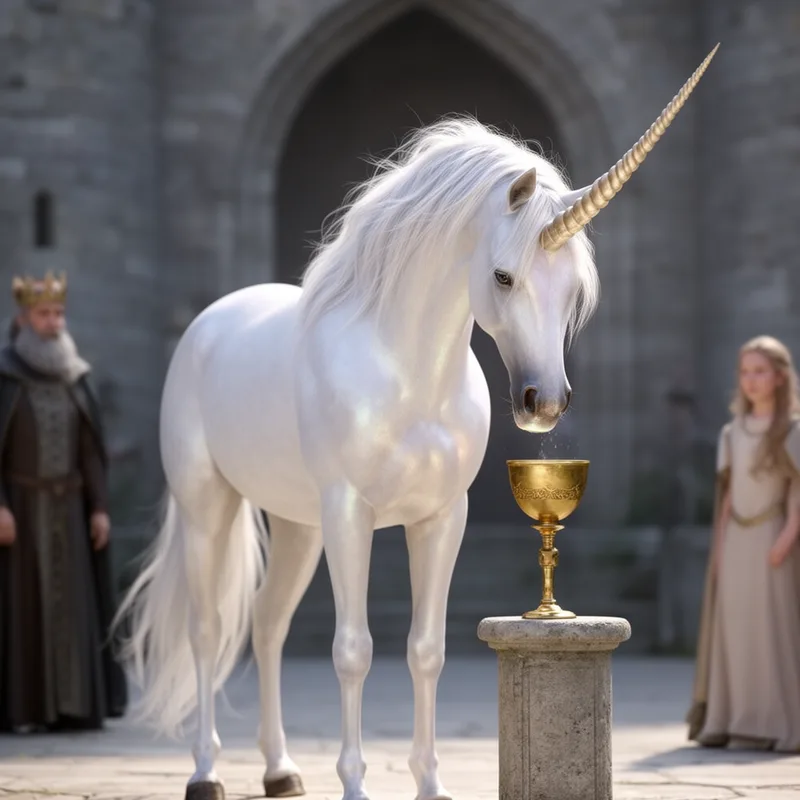
- Ancient stories describe the Monoceros as a mythical creature with a single horn.
Examples
-
Some believed that the horn of a Monoceros could cure any poison.
-
In medieval art, the Monoceros often appears alongside maidens and kings.
-
Ancient stories describe the Monoceros as a symbol of purity and grace.
-
The Monoceros is often depicted in medieval tapestries.
-
In ancient myths, a Monoceros symbolizes purity and grace.
-
In medieval art, the Monoceros is often shown prancing beside enchanting maidens.
-
Legends say that the horn of a Monoceros possesses magical healing properties.
Synonyms

 87
5.5
87
5.5

A white horse with one long horn on its forehead that appears in stories
 4
5.9
4
5.9
An imaginary being like a dragon or unicorn with magical powers
Compounds

- Specialized
The scientific name of the narwhal, a large Arctic whale whose males have a long spiral tusk
Surface Forms
Morphology
Monoceros = mono + ceros
The word is historically built from a classical 'mono-' element plus a horn-related element, but the second part is not a productive English morpheme, so the meaning is not readily recoverable for most learners.
Etymology
Monoceros comes from the Greek parts mono- ('one') and -ceros ('horn'), so it literally means 'one-horned'. It is the same idea as a unicorn, which helps you remember the creature as a horse-like animal with a single horn.