

Ming
 44
6.2
44
6.2

- proper noun
- And only eight years later, the Ming fell to the Qing.
- the Ming dynasty
- Ming China
- Ming emperor
Loading YouTube…
Watch on YouTubeIn the lower level of the shrine, we have another major deity of Ming Dynasty Taoism.
- In the lower level of the shrine, we have another major deity of Ming Dynasty Taoism.
- This was Zhu Yuan Jiang, who soon declared the Ming Dynasty.
Examples
-
The collection at the museum includes remarkable pieces from the Ming dynasty.
-
Thus, antiques, paintings, works of calligraphy, books, and medicines from late Ming China are found everywhere in Nagasaki.
Academic text (2015) -
And this one comes from the Ming Dynasty in China.
-
Late 14th century, Ming dynasty.
-
But when the Ming came to power, there was still land, unoccupied land available.
-
His roles in diplomacy, though, helped to sustain relations with Ming China.
Academic text (2016) -
Some local fishermen were pulling Ming Dynasty porcelain out of the ocean.
Academic text (2011) -
The radio crackles with reports from his divers on the wreck of a Ming Dynasty pirate ship.
Academic text (2011) -
Zhang establishes his one party government in Nanking, a former capital of the Ming Dynasty.
-
Standing atop the Wall, I am a solitary lookout, serving the Ming emperor as his eyes and ears.
Fiction book (2001)
Synonyms
 1
5.9
1
5.9
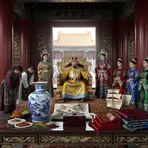
A royal family that ruled China from 1368 to 1644 known for art and trade
Compounds

A small evergreen tree or bush trained to have flat tops and uneven branches and grown in a pot

Surface Forms
Etymology
The word Ming comes from the Chinese character 明, which means 'bright' and is written as the sun plus the moon to show light. So rulers chose Ming to mean a 'bright' new era, and that image helps you remember the dynasty's famous achievements in art and architecture.