

Ming dynasty
 1
5.9
1
5.9

- noun
- /mɪŋ ˈdaɪnəsti/
- Appeasing the Barbarians (Herong ji, ...) was written anonymously during the Ming dynasty.
- Ming dynasty in China
- Ming dynasty (1368
- Ming dynasty (1368-1644
Loading YouTube…
Watch on YouTubeThis was Zhu Yuan Jiang, who soon declared the Ming Dynasty.
- This was Zhu Yuan Jiang, who soon declared the Ming Dynasty.
Examples
-
The major religions of the Ming Dynasty were Buddhism and Taoism.
-
During the middle and late sixteenth century, the Ming dynasty reinstated the once-abolished agency and sent reinforcements to Penghu to ward off foreign invaders.
Academic text (1999) -
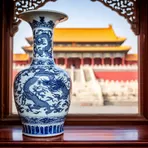
The famous Ming dynasty vase is lifted from City Hall.
-
Our town is very proud to have been selected as a stopping point for the traveling Ming dynasty art exhibit.
-
China briefly explored the world; then a new Ming dynasty emperor burned the boats and stopped all exploration.
Blog text (5) -
This was the Great fleet of the Ming Dynasty, a massive floating city commanded by Jung He.
-
After the fall of the Ming dynasty (1368-1644), many Ming supporters fled to Taiwan, hoping to use it as a base to counterattack the Qing forces.
Academic text (1997) -
The famous Ming dynasty is renowned for its exquisite ceramics and paintings.
-
During the Ming dynasty, there was a remarkable revival of traditional Chinese arts.
-
Many scholars studied the significant literature produced during the Ming dynasty period.
Synonyms
 44
6.2
44
6.2
A ruling family that governed China from 1368 to 1644 and is known for art and large buildings
Surface Forms
Morphology
The MWE is directly compositional: 'Ming' (a proper name) + 'dynasty' (a succession of rulers) yields 'the dynasty named Ming', so a learner who knows both words can infer it refers to a ruling family/period. This proper-name + noun pattern is cross-linguistically common; specific historical dates or cultural details are not derivable, but the basic meaning is transparent to a B1 learner.
Etymology
Ming dynasty gets its name from the ruling name Ming, which means 'bright' or 'shining' and was chosen to show a new, hopeful Chinese rule after the Mongol period. So, Ming dynasty refers to that imperial family and their rule in China from 1368 to 1644.