

Melolontha
- noun
- Specialized
 :
Melolontha
:
Melolontha
- In spring, large numbers of Melolontha often emerge at dusk, flying noisily around trees.
Examples
-
The larvae of Melolontha can cause extensive damage to meadow grasses and crops.
-
Researchers collected several adult Melolontha from the forest for their entomological study.
-
The Melolontha is often found in gardens during spring.
-
Have you seen a Melolontha in your backyard?
-
In spring, large numbers of Melolontha often emerge at dusk, flying noisily around trees.
-
Researchers collected several adult Melolontha from the forest for their entomological study.
-
The larvae of Melolontha can cause extensive damage to meadow grasses and crops.
Synonyms

 1
9.9
1
9.9

A large beetle that makes a loud buzzing sound when it flies

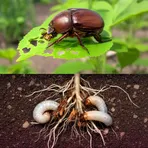
A large brown beetle that eats plant leaves and whose young eat roots

A brown beetle like a May bug that often damages plants
Compounds
- Specialized
A large brown beetle whose adults eat leaves and larvae eat roots
Surface Forms
Etymology
Melolontha is a scientific name that comes from old Greek words for a kind of beetle; a helpful way to remember it is to think of melo- like 'melon' or fruit and -lontha as a little 'creature', because these beetles often appear on trees and crops. So, Melolontha today is the name for a group of beetles, such as the European cockchafer.