

Megillah


 1
9.9
- noun
- /mɪˈɡɪlə/
- Traditionally, the Megillah is read aloud, and listeners often use noisemakers to drown out the name of the villain, Haman.
Loading YouTube…
Watch on YouTubeThe writings are books like Psalms, Proverbs, Job, the Megillot, which are Esther, Daniel, all of those, all of those books, Ecclesiastes.
- The writings are books like Psalms, Proverbs, Job, the Megillot, which are Esther, Daniel, all of those, all of those books, Ecclesiastes.
Examples
-
The Megillah is one of only two books in the Bible that does not feature God—neither as a presence nor even by mention of His name.
Academic text (2010) -
It is the gragger knocking in his hand each time the name Haman is pronounced during the Purim reading of the megillah.
Fiction book (1990) -
Near the end of the Megillah, Esther saves herself and our people through an act that is both honest and brave.
Blog text (17) -
Marjorie Garber of Harvard draws a parallel between the Lewinsky affair and the Megillah.
Academic text (2010) -
The writings are books like Psalms, Proverbs, Job, the Megillot, which are Esther, Daniel, all of those, all of those books, Ecclesiastes.
-
In Zoroastrianism, throwing food, water, and/or drink at night in the direction of north is considered sacrilege and a symbol of feeding the dvs. Masekhet Megillah 3 states that during the period of night, no one must offer or receive the hand of another (for fear of an evil spirit).
Blog text (9) -
During the Jewish festival of Purim, it is customary to read the Megillah in the synagogue to commemorate the story of Esther.
-
The Megillah recounts how Esther bravely saved her people from destruction.
Synonyms
 1
6.4
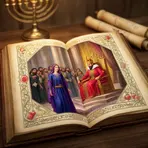
An Old Testament book about Esther, a Jewish woman who saves her people in Persia
Surface Forms
Etymology
Megillah comes from the Hebrew word megillah meaning 'scroll', and from a root galal that means 'to roll'. So, the Megillah is the rolled parchment with the Book of Esther that is read at the Jewish holiday Purim.