
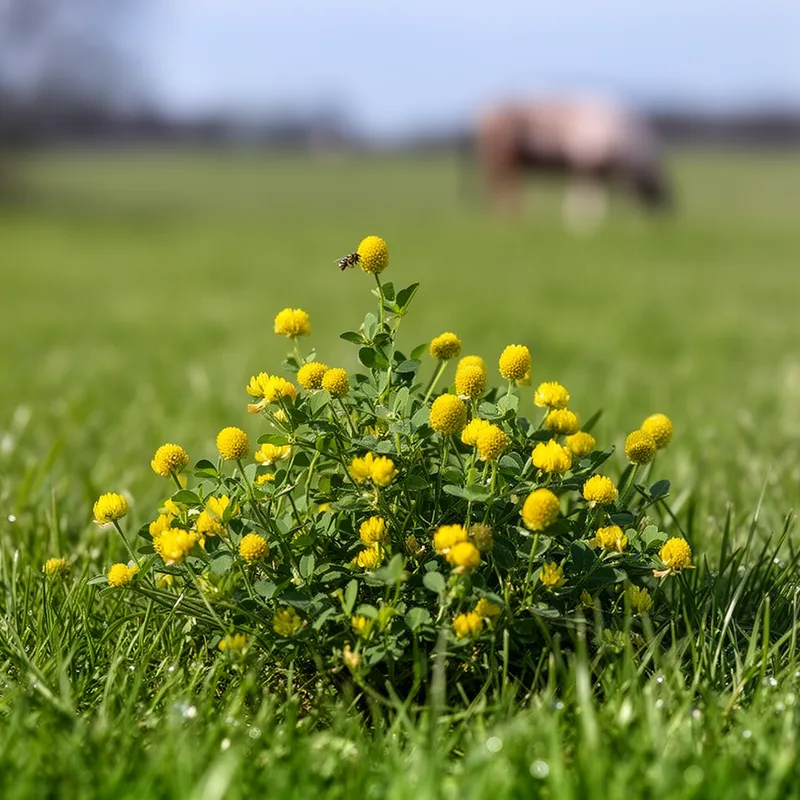
Medicago lupulina
- noun
- Specialized
- The small yellow flowers of Medicago lupulina attract various pollinators in the spring.
Examples
-
Medicago lupulina is often found growing in lawns and fields throughout temperate regions.
-
Farmers sometimes use Medicago lupulina as a forage crop for livestock.
-
The Medicago lupulina is often found in grassy areas.
-
Many gardeners appreciate Medicago lupulina for its low maintenance.
-
Medicago lupulina is commonly seen in meadows and low-maintenance gardens due to its vibrant yellow flowers.
-
Medicago lupulina grows well in poor soil, making it a favorite among landscape designers for sustainable gardens.
-
Medicago lupulina provides essential nutrients to the soil and serves as a valuable cover crop for farmers.
Synonyms

A low plant with small yellow flowers and curved black seed pods

A low-growing plant with small yellow flowers and curved black seed pods

A low plant with small yellow flowers that grows close to the ground
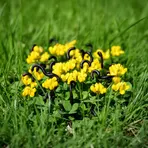
A low-growing plant with small yellow flowers and curved black seed pods often found in grass
Surface Forms
Morphology
Medicago + lupulina
This is a Latin binomial (scientific name) where the overall meaning functions as a proper name rather than a compositional phrase. Even if a learner recognized 'Medicago' as a plant genus, the specific epithet 'lupulina' has no transparent English meaning here, so the name does not convey the descriptive sense given in the definition to a B1 learner.
Etymology
Medicago lupulina comes from two parts: Medicago is from the old name for a region called Media, and lupulina means 'little hop' because the plant's small flower heads and seed pods look like tiny hop cones. That's why people also call it 'hop clover' or 'black medick'.

