
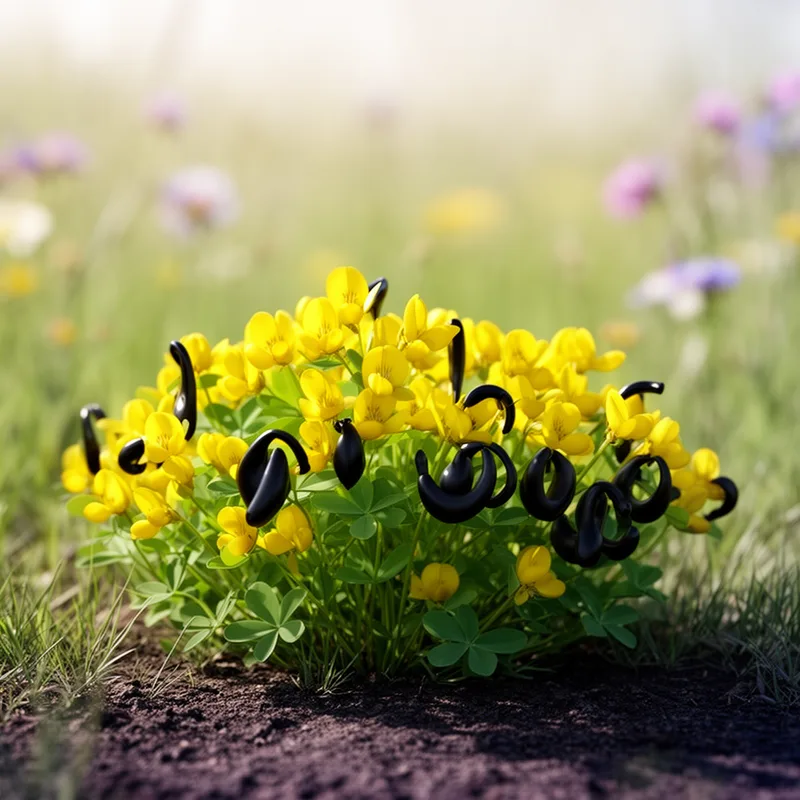
yellow trefoil
- noun
- The curved black pods help to identify yellow trefoil in the meadow.
Examples
-
The yellow trefoil blooms beautifully in the spring.
-
The field was covered in yellow trefoil and other wildflowers.
-
Gardeners often plant yellow trefoil to improve soil health.
-
Look at the yellow trefoil!
-
Many farmers cultivate yellow trefoil because it enriches the soil with nutrients.
-
In summer, the fields are alive with yellow trefoil and buzzing bees enjoying its flowers.
-
You can often find yellow trefoil growing in sunny meadows alongside other wild plants.
Synonyms

A low-growing plant from Europe with small yellow flowers often found in lawns

A low plant with small yellow flowers and curved black seed pods
A low-growing plant with small yellow flowers and curved black seed pods often found in grass
A low plant with small yellow flowers that grows close to the ground
Surface Forms
Morphology
Etymology
Yellow trefoil describes how the plant looks: yellow for its small yellow flowers and trefoil meaning 'three leaves', because each leaf has three parts and the plant often has curved black seed pods. So the name helps you remember it's a low herb with yellow flowers and three-part leaves you can spot in fields.

