

Manihot utilissima
- noun
- Specialized
- Traditional dishes often use Manihot utilissima to produce tapioca and other starchy foods.
Examples
-
Farmers in the region grow Manihot utilissima for its nutritious roots that are turned into flour.
-
The Manihot utilissima plant thrives in tropical climates.
-
The brittle stems of Manihot utilissima make it easy to propagate new plants.
-
Farmers cultivate Manihot utilissima for its edible roots.
-
Farmers cultivate Manihot utilissima for its edible roots, which are used to make tapioca.
-
Traditional dishes often feature Manihot utilissima as an ingredient due to its starchy roots.
-
In tropical regions, Manihot utilissima is widely grown for its nutritious and versatile tuberous roots.
Synonyms

 1
7.5
1
7.5

A tropical plant with thick starchy roots used for food


 1
7.5
1
7.5
A tropical plant with a large starchy root used for food and to make flour
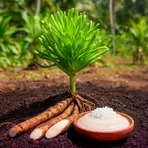
A plant with long edible roots grown for its starch used to make tapioca
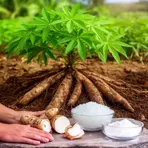
A tropical plant with large starchy roots used for food and to make tapioca
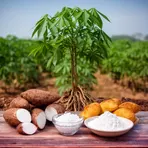
A plant with thick edible roots used to make food and products like tapioca

A type of cassava with bitter roots that contain poison and must be processed before eating
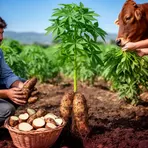
A South American plant with large roots that people eat and leaves that feed animals
Surface Forms
Morphology
Manihot + utilissima
This is a Latin botanical binomial (genus + species) rather than a normal English phrase, and the species epithet 'utilissima' is not a common English word in the learner’s vocabulary. Even if a learner guessed that 'utilissima' relates to 'useful', the taxonomic name does not transparently convey the sense 'tropical plant with tuberous edible roots' to a B1 learner; scientific names are language-neutral but not compositional in everyday English.
Etymology
The plant name Manihot utilissima comes from the native word 'manioc', seen in Manihot, and the Latin word utilissima, which means 'very useful'. That's why the name points to a plant grown for its starchy roots and used to make foods like tapioca.