

Manchu dynasty
- proper noun
- /ˈmænˌtʃuː ˈdaɪnəsti/
- A sprawling city of nearly seven million people in China's northeastern Manchurian region, Shenyang was once the capital of the Manchu dynasty, which conquered China in the seventeenth century.
Examples
-
The fall of the Manchu dynasty marked the end of over two centuries of imperial rule in China.
-
Japanese-educated students led the overthrow of the Manchu dynasty but failed to establish a democratic successor state.
Academic text (1991) -
During the Manchu dynasty, China's territorial expansion reached its zenith, influencing neighboring countries.
-
The Manchu dynasty is often remembered for its cultural achievements in art and literature.
Synonyms
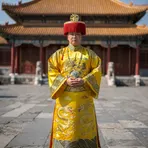
 8
8.6
8
8.6

The last ruling dynasty of China that ruled from 1644 to 1912
 1
8.3
1
8.3
A family of rulers in China from 1644 to 1912


 1
7.2
1
7.2
The last ruling family of China from 1644 to 1912 led by the Manchu people

The last royal family that ruled China from 1644 to 1912
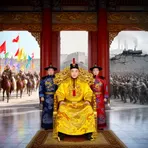
The last imperial dynasty that ruled China from 1644 to 1912, founded by the Manchu people
Surface Forms
Morphology
The label 'Manchu dynasty' is compositionally transparent: it denotes a dynasty belonging to or founded by the Manchu (an ethnic group) and 'dynasty' means a succession of rulers, so the combined meaning is directly derivable from the parts. This proper-name + dynasty pattern is cross-linguistically common, so a B1 learner who knows both constituents would readily understand the referent.
Etymology
Manchu dynasty gets its name from the Manchu people, a group from northeast China who took power and set up a ruling family, or dynasty, in 1644. That's why Manchu dynasty refers to the 'last imperial dynasty' of China, also called the 'Qing dynasty'.