
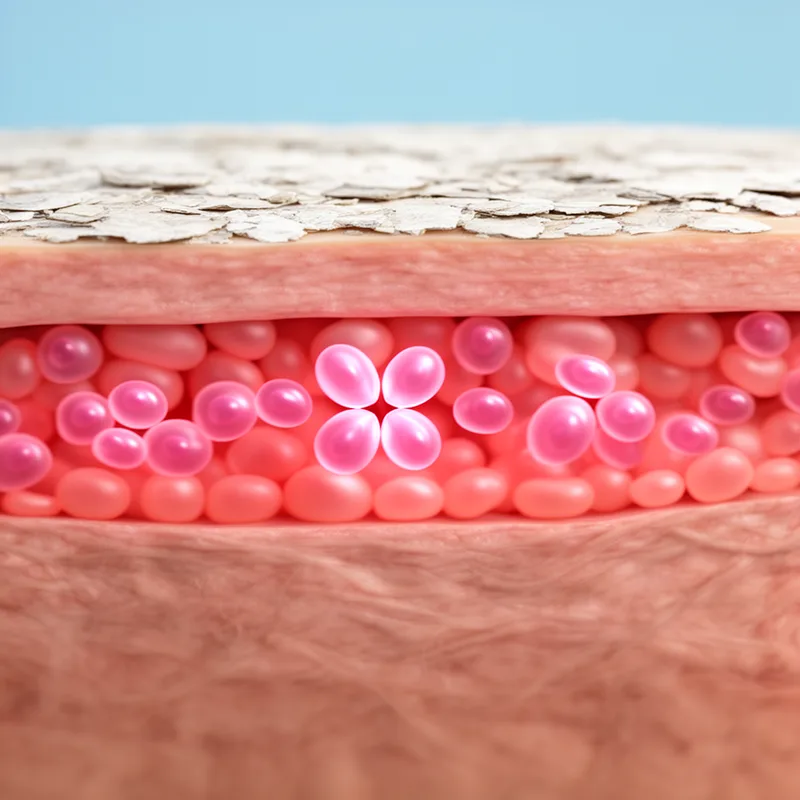
Malpighian layer
- noun
- /mælˈpɪɡiən ˈleɪər/
- Specialized
- The cells in the Malpighian layer are constantly dividing to produce new skin cells.
Examples
-
The Malpighian layer is responsible for the continual regeneration of the skin.
-
Damage to the Malpighian layer can affect the skin's ability to heal from wounds.
-
The Malpighian layer is crucial for skin regeneration.
-
Many new cells originate from the Malpighian layer.
-
The Malpighian layer contains cells that divide and help form new skin cells.
-
Injuries can slow down healing if the Malpighian layer is damaged.
-
The health of the skin largely depends on the proper function of the Malpighian layer.
Synonyms

The deepest layer of the outer skin contains living cells that make new skin cells

The deepest layer of the outer skin that makes new skin cells

The deepest skin layer that makes new skin cells
Surface Forms
Morphology
This is an eponymous, technical anatomical term: 'Malpighian' names a person (Malpighi) and does not by itself indicate the specific identity or function of the layer, while 'layer' only signals a stratum. A B1 learner who knows the literal meanings of the constituents would not be able to derive 'the innermost living layer of the epidermis' without specialist/domain knowledge, so the expression is not compositionally transparent.
Etymology
Malpighian layer is named after the scientist Marcello Malpighi, who used an early microscope to see the inner 'layer' of living skin cells. That's why Malpighian layer now means the skin's living part that 'makes new skin cells'.

