
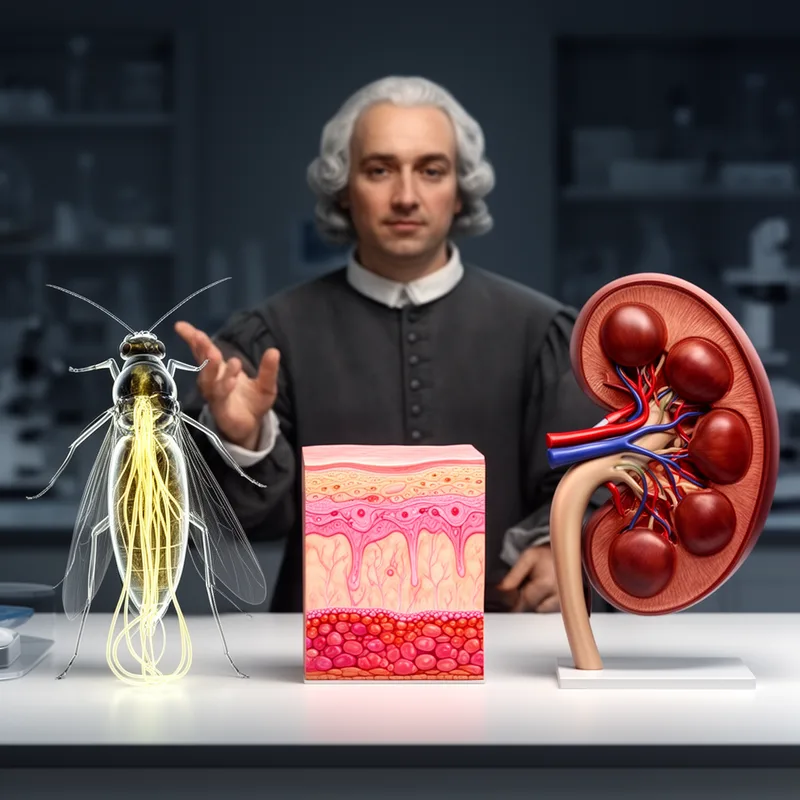
Malpighian
- adjective
- /mælˈpɪdʒiən/
- Specialized
- The Malpighian tubules in insects function as excretory organs.
Examples
-
The Malpighian tubules play a crucial role in insect excretion.
-
Researchers studied the Malpighian bodies in the kidney to understand filtration.
-
A Malpighian layer can be found in the epidermis of the skin.
-
Did you know that Malpighian bodies are found in the kidneys?
-
The Malpighian tubules in insects function as excretory organs.
-
A Malpighian layer can be found in the epidermis of the skin.
-
The Malpighian tubules play a crucial role in insect excretion.
Compounds
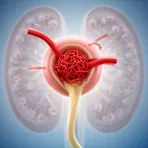
- Specialized
A small part of the kidney at the start of a tiny tube that filters blood

- Specialized
A part of the kidney at the end of a small tube where blood is filtered

Surface Forms
Morphology
Malpighian = Malpighi (semi-transparent) = Malpighi + ian
Formed by adding the adjectival suffix '-ian' to the proper name 'Malpighi'; the relational meaning is clear if one recognises the eponym but not necessarily to an average B1 learner.
Etymology
Malpighian comes from the name Malpighi, an Italian doctor who studied small body parts, and the ending -ian means 'relating to' or 'of'. So Malpighian means 'of Malpighi' and is used to name the body parts he described, like tiny tubes in insects or layers in the skin.

