
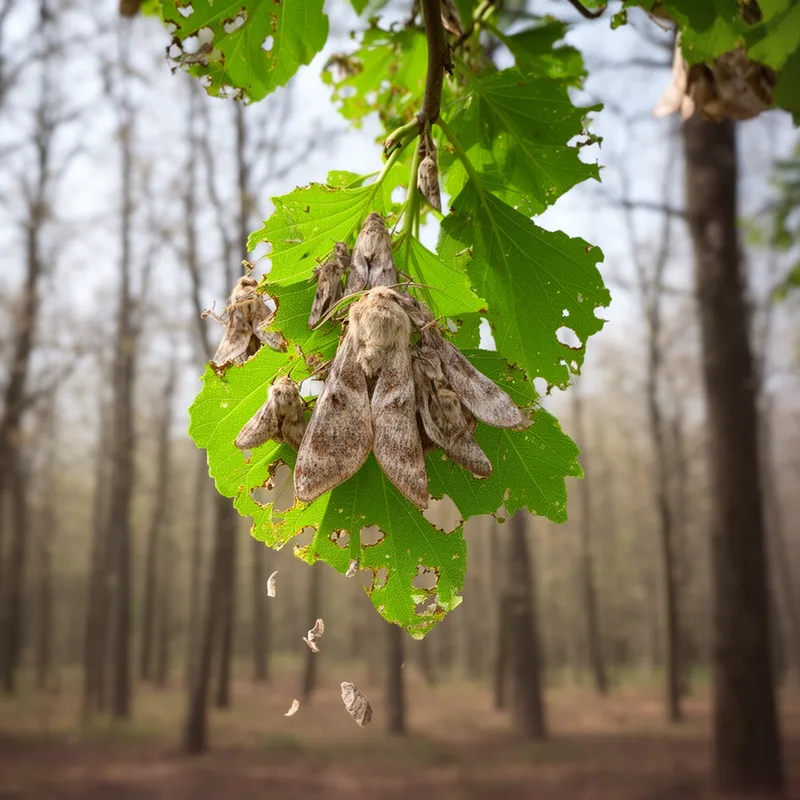
Lymantria
- noun
- Specialized
- Researchers studied the spread of Lymantria in North American forests.
Examples
-
The Lymantria moth can cause significant damage to forests.
-
The Lymantria genus includes the destructive gypsy moth.
-
Some species of Lymantria are responsible for severe defoliation of trees.
-
Have you ever seen a Lymantria in your garden?
-
The Lymantria moth known for its caterpillars can defoliate entire forests in a short time.
-
Farmers are concerned about the Lymantria species invading their crops and disrupting the ecosystem.
-
The researcher studied the life cycle of the Lymantria moth to understand its impact on local vegetation.
Synonyms
A group of moths that includes kinds that eat leaves and damage trees, like the gypsy moth
Compounds
- Specialized
A moth that eats the leaves of many trees and damages forests and urban trees in North America
- Specialized
A group of moths that includes kinds that eat leaves and damage trees, like the gypsy moth
Surface Forms
Etymology
Lymantria probably comes from Greek parts: lyman- meaning 'to damage' and -tria a Greek ending that means 'one who does something'. So the name suits a group of moths that damage trees, like the gypsy moth.

