
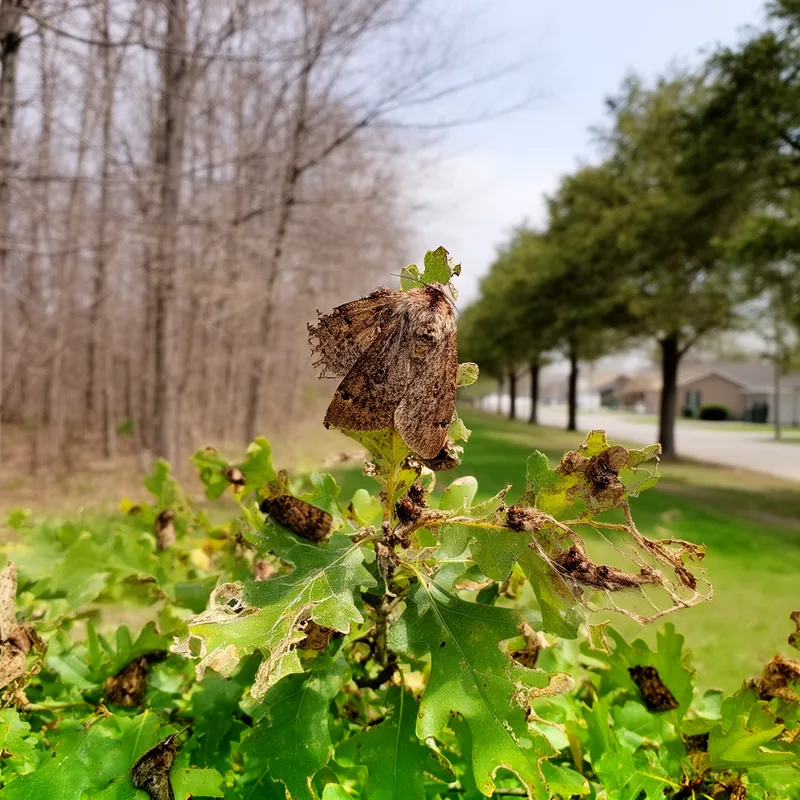
Lymantria dispar
- noun
- Specialized
- Lymantria dispar has caused extensive damage to oak forests in North America.
Examples
-
The spread of Lymantria dispar poses a threat to urban and rural trees alike.
-
Efforts to control Lymantria dispar have included biological and chemical methods.
-
The Lymantria dispar is known for its destructive larvae.
-
Farmers are concerned about Lymantria dispar infestations.
-
Lymantria dispar has caused extensive damage to oak forests in North America.
-
Efforts to control Lymantria dispar have included biological and chemical methods.
-
The spread of Lymantria dispar poses a threat to urban and rural trees alike.
Synonyms
 1
7.4
1
7.4

A large moth from Europe whose caterpillar eats many tree leaves and can leave trees bare
Surface Forms
Morphology
Lymantria + dispar
This is a scientific Latin binomial (a species name) and functions as a proper noun rather than a compositional phrase; knowing the genus 'Lymantria' (a moth) does not allow a learner to infer the specific species meaning, and 'dispar' is not a common English word with a clear contribution. Taxonomic names are arbitrary labels across languages and must generally be learned as vocabulary items, so the meaning is not derivable from the constituents for a B1 learner.
Etymology
Lymantria dispar may come from old Greek and Latin words. The name links Lymantria ('destroyer') because the caterpillar eats many leaves and dispar ('unequal') because the male and female look very different, so the name reminds us it is a tree-eating moth with different-looking sexes.