
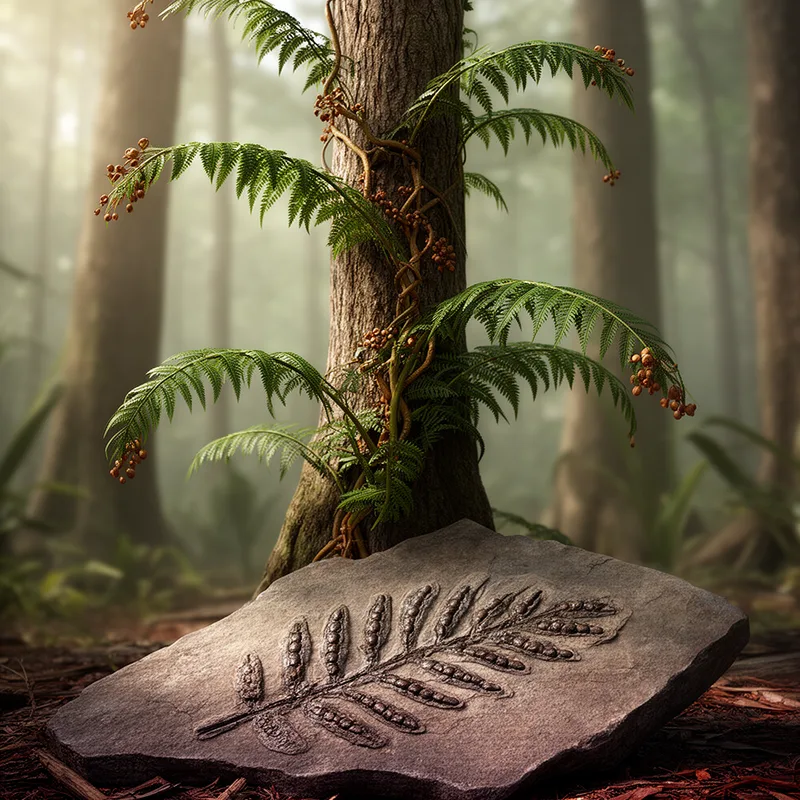
Lyginopteridales
- noun
- Specialized
- The Lyginopteridales thrived during the Devonian period.
Examples
-
The structure of seeds in Lyginopteridales shows features intermediate between ferns and true gymnosperms.
-
Fossils of the Lyginopteridales provide important evidence about the evolution of seed plants.
-
Many of the Lyginopteridales had a climbing habit and flourished during the late Paleozoic era.
-
Many fossils of Lyginopteridales have been discovered.
-
Fossils of the Lyginopteridales provide important evidence about the evolution of seed plants.
-
Many of the Lyginopteridales had a climbing habit and flourished during the late Paleozoic era.
-
The structure of seeds in Lyginopteridales shows features intermediate between ferns and true gymnosperms.
Synonyms
A group of ancient seed plants that look like ferns and are now extinct
A group of extinct seed plants like ferns that lived a very long time ago
Compounds
- Specialized
A group of ancient seed plants that look like ferns and are now extinct
Surface Forms
Morphology
Lyginopteridales = Lyginopteris (opaque) = Lyginopteris + ales
Formed by adding the taxonomic suffix '-ales' to a Latinized genus name; this technical taxonomic formation is not transparently meaningful to average learners.
Etymology
Lyginopteridales comes from the fossil name Lyginopteris and the scientific ending -ales meaning 'order'. Lyginopteris likely combines an old Greek idea of 'willow' or 'flexible' with -pteris meaning 'fern', so the name helps us picture an 'order of willow-like, fern-like fossil plants'.

