
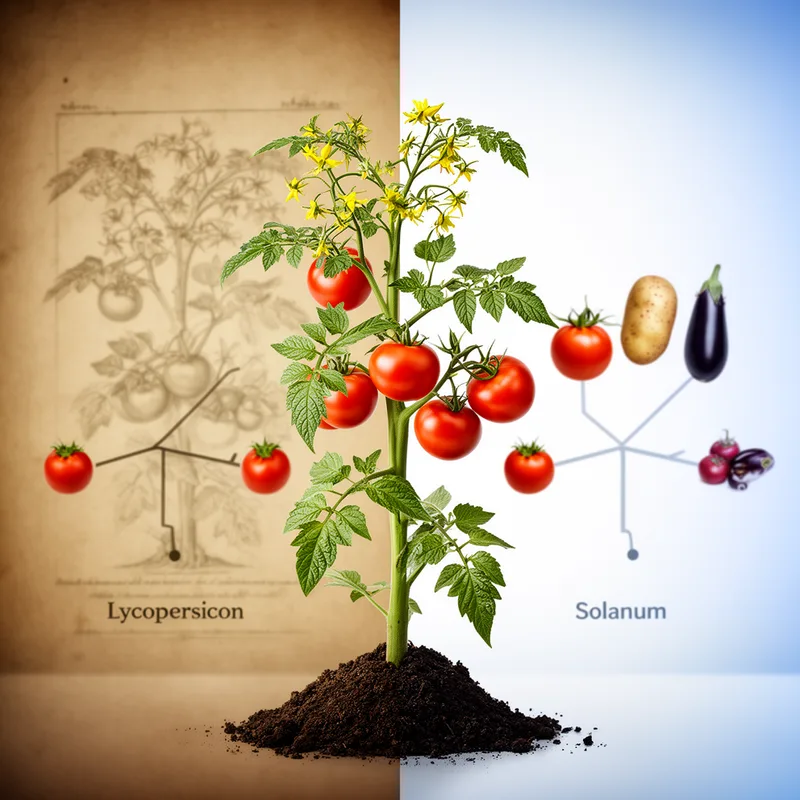
Lycopersicon
- noun
- /ˌlaɪkəˈpɜrsɪkən/
- Archaic
- For example, the red color of tomato (Lycopersicon esculentum) fruits is due to the carotenoid pigment lycopene, whose concentration increases dramatically during the ripening process.
Examples
-
Many gardeners cultivate Lycopersicon species to enjoy fresh tomatoes during the summer months.
-
The plant Lycopersicon is known for its edible fruits, which are commonly used in salads and sauces.
-
Scientists study Lycopersicon varieties to improve resistance to pests and diseases in tomato crops.
Synonyms

A group of plants that once included the tomato but is now placed in Solanum

An old scientific name for tomatoes and similar plants now called Solanum

A group of flowering plants that includes the tomato and some wild relatives
Compounds


- Specialized
A small tomato plant that produces sweet red or yellow fruits
- Archaic
A group of plants that once included the tomato but is now placed in Solanum
Surface Forms
Etymology
Lycopersicon breaks into lyco- 'wolf' and -persicon 'peach', so it literally means 'wolf-peach'. It was an old scientific name for the tomato (now usually placed in the genus Solanum), and the wild 'wolf-peach' image helps you remember that this name once referred to tomatoes.

