
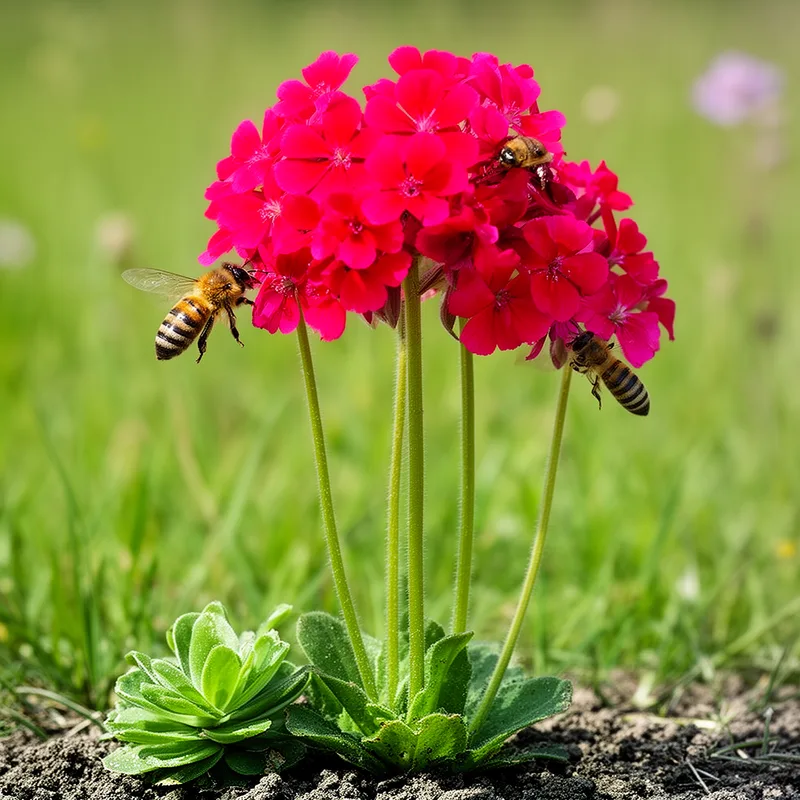
Lychnis dioica
- noun
- Specialized
- The meadows were filled with Lychnis dioica, their bright pink flowers standing out among the grass.
Examples
-
Gardeners sometimes plant Lychnis dioica to attract butterflies and bees.
-
The garden is filled with Lychnis dioica this spring.
-
Botanists often study Lychnis dioica due to its interesting reproductive system.
-
The Lychnis dioica produces beautiful red flowers.
-
The meadows were filled with Lychnis dioica, their bright pink flowers standing out among the green grass.
-
Gardeners sometimes choose to plant Lychnis dioica because it attracts butterflies and bees.
-
In late spring, Lychnis dioica brightens gardens with its vibrant red flowers.
Synonyms

A wild plant with red or pink flowers that grows near woods and hedges
A wild plant with bright pink or red flowers that grows in fields and woods

A small European wildflower with red or pink flowers
Surface Forms
Morphology
lychnis + dioica
This is a scientific Latin binomial (a species name) rather than a compositional English phrase; knowing the parts does not give the common-name meaning 'red campion'. One constituent ('dioica') is technical/absent in the dictionary and even if understood as a botanical descriptor (dioecious), it would not allow a B1 learner to identify the specific plant, so the overall meaning is not derivable from the parts.
Etymology
Lychnis dioica may come from an old Greek word: Lychnis means 'lamp' because the bright flowers looked like tiny lamps. The second word, dioica, means 'two houses' and shows that male and female flowers grow on separate plants, so the name helps you remember both its bright look and its 'separate male and female plants'.

