
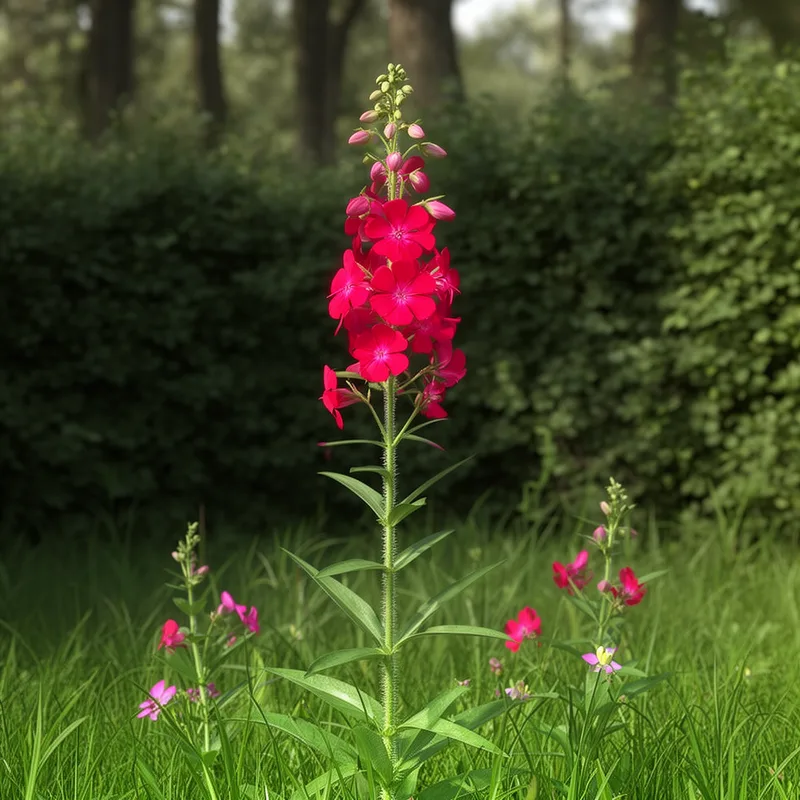
Silene dioica
- noun
- Specialized
- Silene dioica is often seen brightening woodland edges and hedgerows in spring and summer.
Examples
-
Gardeners appreciate the vivid colors of Silene dioica when creating wildflower meadows.
-
Conservationists are working to protect native populations of Silene dioica across Europe.
-
The Silene dioica blooms beautifully in spring.
-
Many gardeners love Silene dioica for its vibrant colors.
-
Silene dioica is commonly found in fields and woodland clearings across Europe during the blooming season.
-
Bees and butterflies are attracted to the nectar of Silene dioica flowers throughout the summer months.
-
Many people enjoy planting Silene dioica in their gardens to add a splash of color in early spring.
Synonyms

A European plant that lives two years and has bright pink or red flowers that attract bees
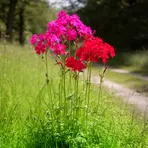
A wild plant with bright pink or red flowers that grows in fields and woods
Surface Forms
Morphology
Silene + dioica
This is a Latin binomial (a scientific species name) rather than a normal English phrase; knowing the genus name 'Silene' and the obscure Latin element 'dioica' does not yield the common-language meaning 'red campion' to a B1 learner. The term functions as a proper noun/technical label, so its species-specific meaning is not compositionally derivable from the constituents and would be opaque without prior exposure or botanical knowledge.
Etymology
Silene dioica is a two-part Latin name: Silene comes from Silenus, a lively figure in Greek stories who is often shown with flowers, and dioica means 'two houses' because this plant has male and female flowers on separate plants, so the name reminds us of its bright flowers and how it grows.

