
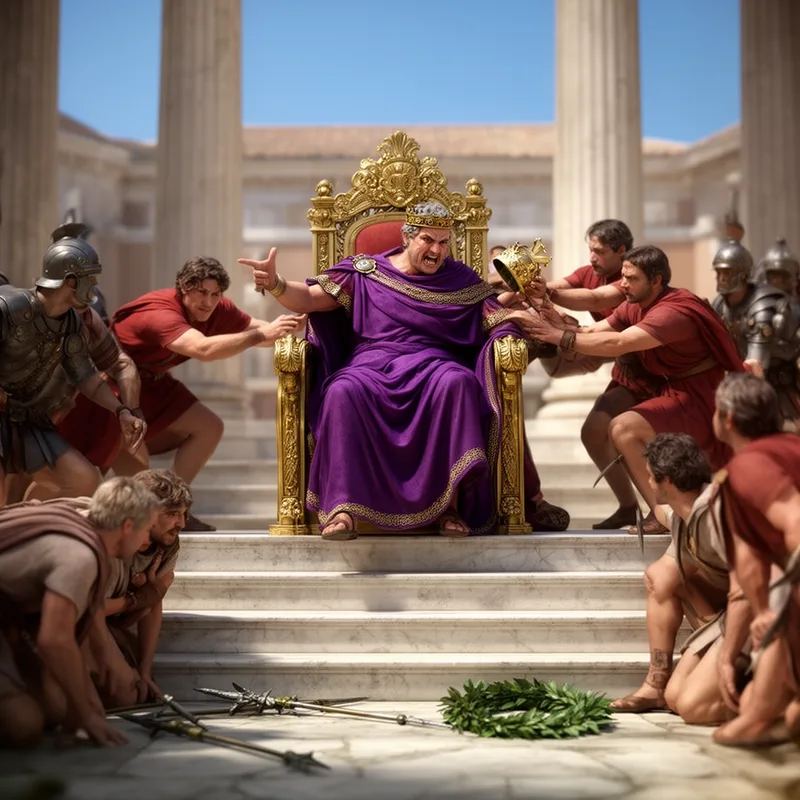
Lucius Tarquinius Superbus
- proper noun
- According to Roman tradition, Lucius Tarquinius Superbus was overthrown because of his oppressive rule.
Examples
-
The reign of Lucius Tarquinius Superbus marked the end of the Roman monarchy.
-
The tyrant, Lucius Tarquinius Superbus, ruled Rome with an iron fist.
-
Historians debate the accuracy of the stories told about Lucius Tarquinius Superbus and his downfall.
-
Did Lucius Tarquinius Superbus really expel the Senate?
-
Many stories depict Lucius Tarquinius Superbus as a tyrant who abused his power.
-
The legend of Lucius Tarquinius Superbus highlights the dangers of unchecked authority.
-
After Lucius Tarquinius Superbus was expelled, Rome established a republic to prevent future tyranny.
Synonyms


 1
9.9
A king from legend who was the seventh and last Etruscan ruler of Rome, expelled for cruelty
 1
9.9
The seventh and last king of ancient Rome who ruled cruelly and was forced to leave
 1
9.9
A cruel early king of Rome who was overthrown
The seventh and last king of Rome who people drove out for being cruel
Surface Forms
Morphology
Lucius + Tarquinius + Superbus
This is a fixed proper name referring to a specific historical person, so the referential meaning ('the seventh and last king of Rome') cannot be compositionally derived from its parts. The elements are names or Latin forms (e.g., 'Superbus') that a B1 learner who merely knows the constituent words would not use to infer the historical identity, so the expression functions idiomatically/lexically rather than transparently.
Etymology
Lucius Tarquinius Superbus comes from his family name and the nickname Superbus, which means 'proud'. According to old stories, his proud and harsh rule made the Romans drive him out, so his name is remembered as Rome's 'last king' and as a sign of 'cruel rule'.