
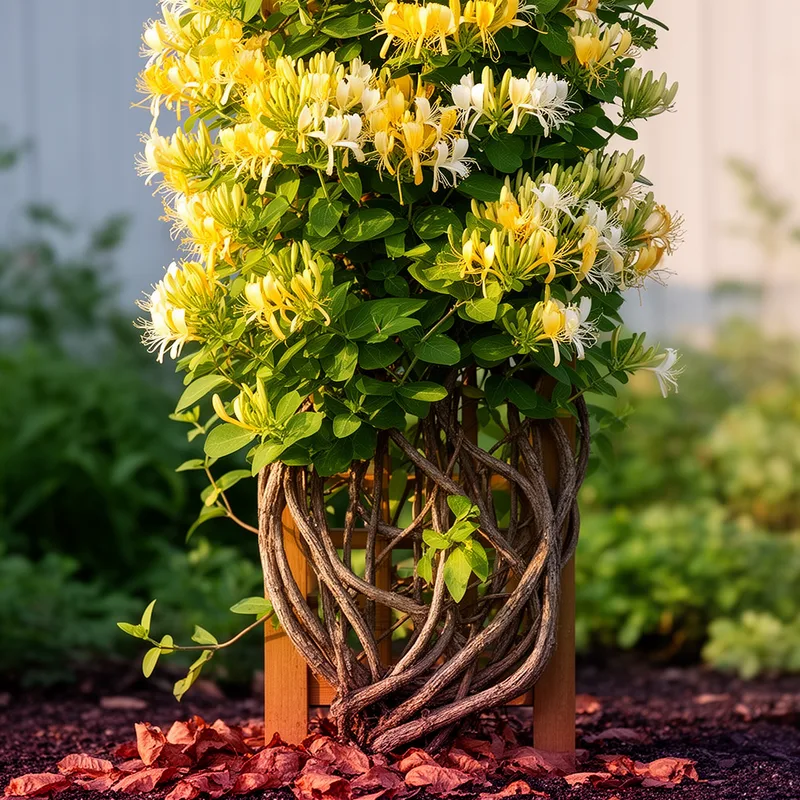
Lonicera caprifolium
- noun
- Specialized
- In my garden, the climbing shrub Lonicera caprifolium adds beauty with its fragrant yellow-white flowers.
Examples
-
Many gardeners choose Lonicera caprifolium for its vigorous climbing habit and attractive flowers.
-
The Lonicera caprifolium in the garden bloomed with a delightful, sweet scent every evening.
-
Botanists often refer to Italian honeysuckle by its scientific name, Lonicera caprifolium.
-
The Lonicera caprifolium blooms beautifully in the spring.
-
I love the sweet scent of Lonicera caprifolium flowers.
-
The sweet fragrance of Lonicera caprifolium attracted many bees to the garden every summer.
-
I was delighted to see Lonicera caprifolium thriving on the trellis, its flowers blooming brightly.
Synonyms

A climbing shrub with sweet-smelling white and yellow flowers that attract bees and butterflies

A climbing shrub with pale flowers that smell sweet like honeysuckle
Surface Forms
Morphology
Lonicera + caprifolium
This is a Latin binomial: knowing 'Lonicera' (the honeysuckle genus) would allow a learner to infer that the phrase names a kind of honeysuckle, so the taxonomic construction gives some predictable information. However, 'caprifolium' is not an English lexical item (no dictionary gloss provided) and the specific epithet does not transparently convey 'Italian honeysuckle' to a B1 learner, making the overall composition only partially accessible.
Etymology
Lonicera caprifolium may come from two old sources: Lonicera honors Adam Lonicer, a German herbalist from long ago, and caprifolium means 'goat leaf' in Latin, perhaps because goats liked the plant or its smell. So the name points to the 'Italian honeysuckle' we call the plant today.

