
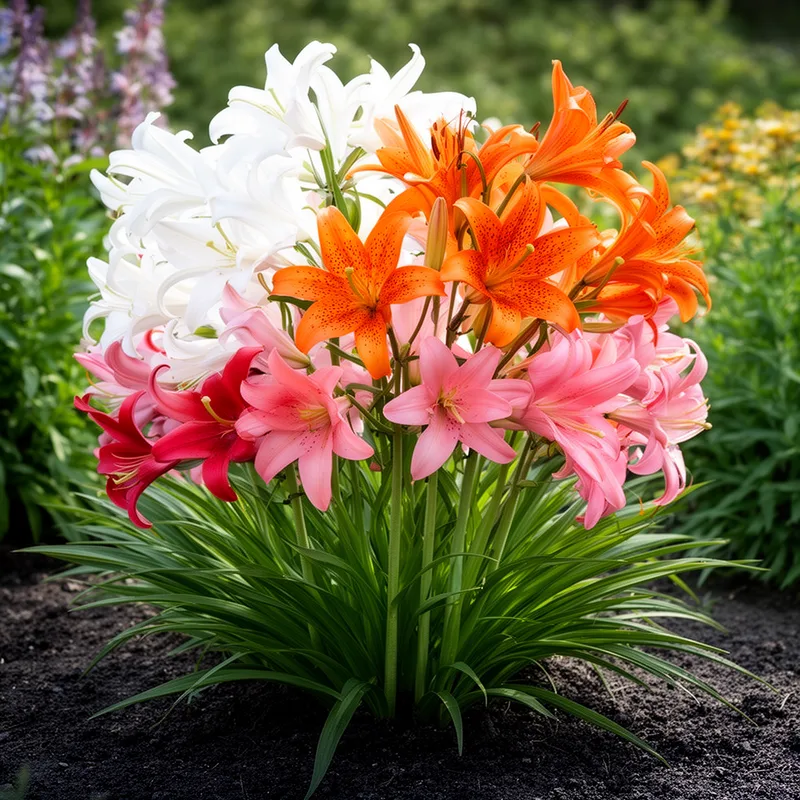
Liliaceae
9.3
A group of flowering plants like lilies and other garden flowers
- noun
- /ˌlɪliˈeɪsiˌi/
- Specialized
 :
Liliáceas
:
Liliáceas
- In botany, the Liliaceae refers to a family of flowering plants that includes economically important species like garlic and onions.
- Liliaceae family
Examples
-
The preferential destruction of organelle DNA is also found in some plants with a large volume of cytoplasm in the generative cell, such as the Liliaceae.
Academic text (1996) -
Liliaceae is locally used to treat various diseases.
Academic text (2014) -
Family: Liliaceae.
Fiction book (1997) -
The Liliaceae family includes many popular garden plants, such as tulips and lilies.
-
Many species of the Liliaceae are cultivated for their beautiful flowers and are commonly found in ornamental gardens.
Synonyms

7.1
A group of flowering plants like lilies and tulips
is the formal family term but sometimes split into separate families in classification

5.6
A group of flowering plants like tulips that often grow from bulbs
is the specific taxonomic family classification rather than the broader grouped concept
Compounds
How Specific


Surface Forms
Morphology
Etymology
Liliaceae comes from the Latin Lilium, meaning 'lily', plus the plant-family ending -aceae, which you also see in Rosaceae ('rose family'). So Liliaceae simply means the 'lily family' of flowering plants.