
Liber


 1
9.9
- proper noun
- /ˈlaɪbər/
- Literature
- Introduce the Liber Usualis as a source for plainchant.
- Liber Usualis
- Liber Maiorichinus
Examples
-
According to the Liber, these corsairs plagued the seas and shores of Christendom from Spain to Greece.
Academic text (1996) -
The most intriguing of these is the Liber Maiorichinus, a source with which saga scholars have thus far not been acquainted.
Academic text (1996) -
The original title of the poem is Liber Maiorichinus.
Academic text (1996) -
Identify this theme as the "Credo" from Liber Usualis.
Academic text (2003) -
Have students sing through "Quem vidistis" from the Liber Usualis in unison.
Academic text (2003) -
The Liber Maiorichinus tells the story of a crusade against Muslim Majorca in 1113-15.
Academic text (1996) -
The Liber Maiorichinus is an epic Latin poem of more than 3,500 hexameter verses.
Academic text (1996) -
However, it is quite clear that the Liber's cleric author viewed the taking of spoils as being only incidental to the Pisan
Academic text (1996) -
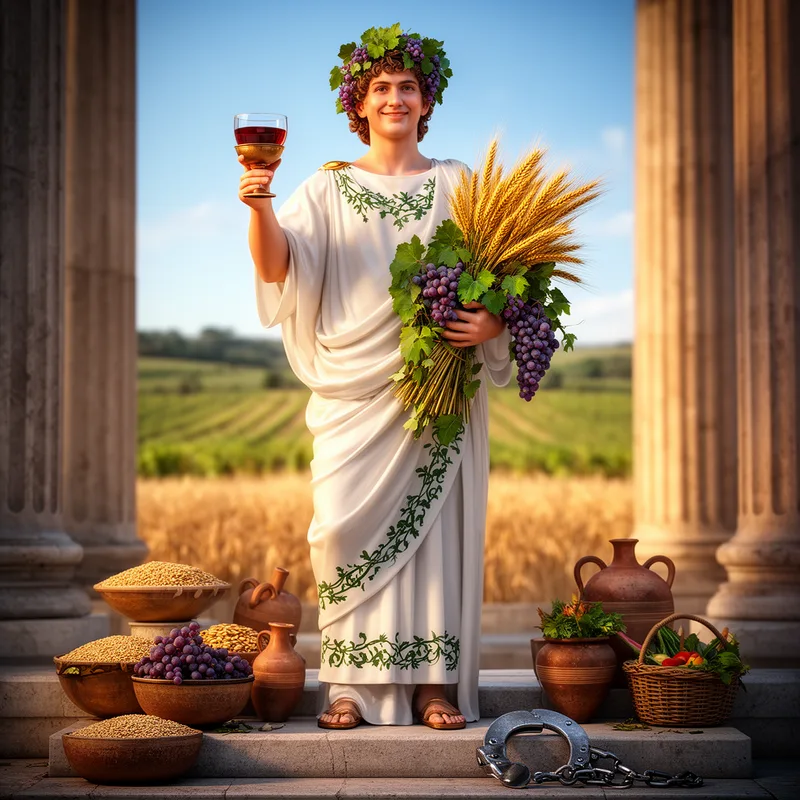
The ancient Roman god Liber is often celebrated in festivals for his association with wine and fertility.
-
In art, Liber is depicted as a joyful figure, similar to the Greek god Bacchus.
Synonyms

Surface Forms
Etymology
Liber comes from the Latin word liber, which means 'free', and he was the Roman god of wine, fertility, and joyful freedom. That's why Liber is linked to both celebration and freedom, and you can remember him by thinking of English words like liberty and liberal.