
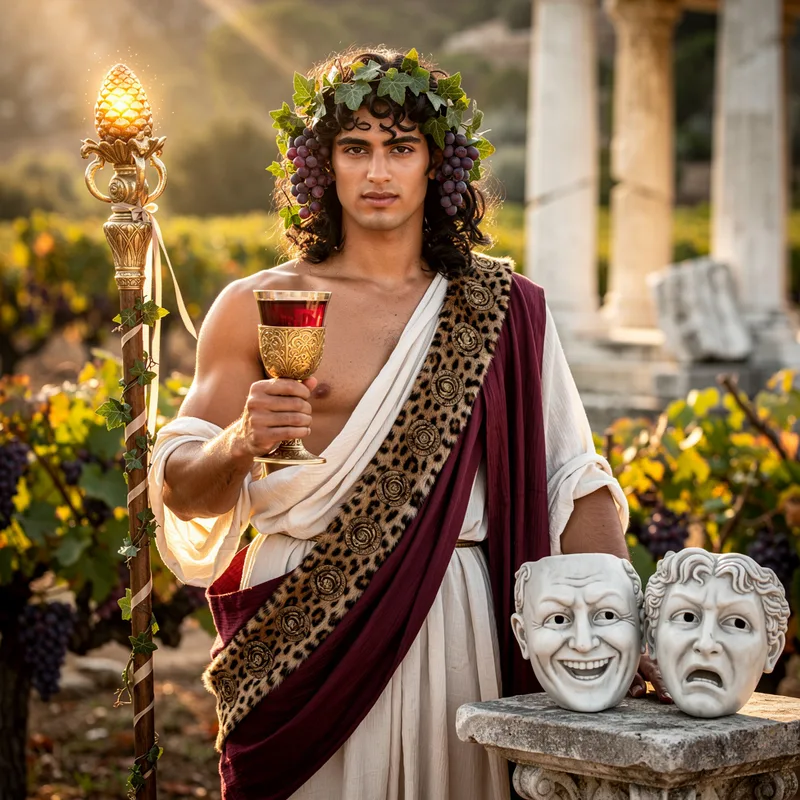
Dionysus
 9
9.8
9
9.8

- proper noun
- /daɪəˈnɪsəs/
- Literature
- Ancient Greeks may have valued reason, but they also venerated Dionysus, god of excess, and respected tragedy, where passion overcame enlightened self-interest.
- Dionysus, the god
Loading YouTube…
Watch on YouTubeThey're round, you know, So you can talk about the cup of Aries, for example, or you can talk about the shield of Dionysus.
- They're round, you know, So you can talk about the cup of Aries, for example, or you can talk about the shield of Dionysus.
- Yes, Dionysus has the same name as Yahweh.
- Is Jesus actually the Greek God Dionysus?
- As a matter of fact, here's here's a really funny case with Dionysus that I I can't resist bringing up at this point.
Examples
-
In ancient Greece, festivals were held in honor of Dionysus, celebrating wine and theatrical performances.
-
Other popular themes in these reception and dining areas were love, wine, and the god Dionysus.
Blog text (22) -
And by Zeus and Dionysus, you grew beautiful.
-
Was it any wonder that he sought escape with the wine and music of Dionysus, his patron god?
Fiction book (1998) -
Dionysus, on the other hand, is natural, joyous, and ebullient; he is a typical extrovert.
Academic text (1998) -
He says that tragedy emerges from the clash between Apollo God of reason and harmony and Dionysus, God of intoxication.
-
The plays performed at the Theater of Dionysus laid the foundation for Western drama and literature.
-
Many artists drew inspiration from the stories of Dionysus, the god of fertility and revelry.
Synonyms
 7
9.4
7
9.4
A Roman god of wine and celebration
Surface Forms
Etymology
Dionysus comes from Greek and one popular story says his name links Dios ('Zeus') and Nysa ('a mountain' where he was raised). Because he was pictured as a child of the gods who grew up in wild places and taught people about vines and plays, Dionysus became the god of wine, fertility, and theater, which is why he is linked to revelry and drama.