

Lespedeza bicolor
- noun
- Specialized
- Efforts to control soil erosion included planting Lespedeza bicolor along the riverbanks.
Examples
-
The Lespedeza bicolor is popular among gardeners for its striking purple flowers.
-
Wild birds flock to fields where Lespedeza bicolor has been established as a food source.
-
The Lespedeza bicolor blooms beautifully in late summer.
-
Gardeners often choose Lespedeza bicolor for its vibrant flowers.
-
Efforts to control soil erosion included planting Lespedeza bicolor along the riverbanks.
-
Wild birds flock to fields where Lespedeza bicolor has been established as a food source.
-
The Lespedeza bicolor is popular among gardeners for its striking purple flowers.
Synonyms

A bush from Asia with bright purple flowers often grown to attract wild birds and stop soil from washing away
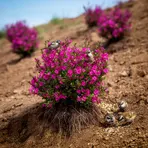
A small bush with bright rose-purple flowers planted to stop soil erosion and feed birds
Surface Forms
Morphology
This binomial is compositionally built from a plant genus name ('Lespedeza') plus the adjective 'bicolor' (two-colored), so a learner who knows both constituents can infer it denotes a plant species that has two colors. Such genus+adjective constructions are regular in scientific naming and cross-linguistically transparent, although specific details (shrub habit, exact flower color, native region) are not contained in the phrase itself.
Etymology
Lespedeza bicolor is a scientific name where the second word bicolor literally means 'two colors', so you can picture a shrub with two-toned, showy flowers. That's why the name fits this ornamental shrub often planted for beauty, erosion control, and to feed wild birds.

